
 Get the Muslim Alim app
Muhammad ﷺ, the Seal of the Prophets: his life
Life of the Prophet Muhammad ﷺ
Birth and Youth (570-595)
- 570 CE: Born in Mecca (the Year of the Elephant)
- 576 : Orphaned of both parents
- Youth: In the care of his grandfather, then of his uncle Abu Talib
Qualities of His Youth
- As-Sadiq (the Truthful)
- Al-Amin (the Trustworthy)
- Moral excellence
Before Prophethood (595-610)
- Marriage to Khadija at the age of 25
- A prosperous trading business
- Regular retreats to meditate in the cave of Hira
- A spiritual search and the rejection of idolatry
The Beginning of Revelation (610-613)
- 610 : The first revelation in the cave of Hira
- The first believers: Khadija, Ali, Abu Bakr
- 613 : The beginning of open preaching
The Meccan Period (613-622)
Trials and Perseverance
- Growing opposition from the Quraysh
- Persecution of the first Muslims
- A social and economic boycott
- The Year of Sorrow: the loss of Khadija and Abu Talib
The Hijra and the Medinan Period (622-632)
- 622 : The migration to Medina
- 624 : The battle of Badr
- 628 : The treaty of Hudaybiyyah
- 630 : The peaceful conquest of Mecca
- 632 : The Farewell Pilgrimage and his death
Major Achievements
What He Accomplished
- Establishing the first Islamic society
- The Constitution of Medina
- The unification of Arabia
- The complete delivery of the Quran
- The institution of the pillars of Islam
Personal Qualities
- Exemplary modesty and humility
- Compassion towards all
- A simple way of life
- Excellence in every role
- The promotion of learning and knowledge
Main Teachings
Core Pillars
- Pure monotheism (Tawhid)
- Social and economic justice
- High ethics and morals
- The equality of all human beings
- The protection of human rights
Discover the story of the Prophet Muhammad and the prophets of Islam
Muhammad ﷺ was born around 570 AD in Mecca, into the tribe of Quraysh. His father Abdullah died before his birth and his mother Amina when he was only six. He grew up with his grandfather Abd al-Muttalib, then with his uncle Abu Talib, who became his protector.
As a young man, Muhammad ﷺ worked as a merchant and was noted for his honesty. People called him al-Amin, the one who can be trusted. At 25 he married Khadija, a wealthy widow fifteen years his senior who employed him in her trading business.
The event that changed everything came when he was 40. Muhammad ﷺ used to withdraw to the cave of Hira to meditate. It was there that the angel Jibril (Gabriel) appeared to him for the first time and revealed to him the first verses of the Quran. That first revelation marks the beginning of his prophetic mission.
He began to preach quietly. His wife Khadija became the first Muslim, followed by his cousin Ali and his friend Abu Bakr. Faced with persecution from the Meccans, who saw their traditions threatened, the first Muslims endured heavy trials.
In 622, Muhammad ﷺ and his companions left Mecca for Medina. That Hijra marks year 1 of the Islamic calendar. In Medina he established the first Muslim community and became both spiritual guide and political leader. The five daily prayers and the other pillars of Islam took shape during that time.
The Prophet ﷺ returned to Mecca as a conqueror in 630. He forgave his former enemies and cleared the Kaaba of idols. Muhammad ﷺ died in 632 in Medina, having delivered the divine message in full to the believers. His example still guides more than a billion Muslims around the world today.
Also worth reading
All of Prophets
The Prophet's Farewell Sermon
Arabic text and translation of the Prophet Muhammad's ﷺ farewell sermon at Arafat during the Farewell Pilgrimage: equality, women's rights, Quran and Sunnah.
Read
The Prophet Adam
The story of the Prophet Adam in Islam: his creation from clay, the prostration of the angels, the refusal of Iblis, the slip, the repentance and his offspring.
Read
The Prophet Al-Yasa
Who is the Prophet Al-Yasa (Elisha) in Islam? His two mentions in the Quran, his mission to the Children of Israel and his link with the Prophet Ilyas.
Read
The Prophet Ayyub
The story of the Prophet Ayyub (Job) in Islam: the loss of his wealth, his children and his health, his prayer, his healing and his patience rewarded.
Read
Famous hadiths of the Prophet
The best-known hadiths of the Prophet Muhammad ﷺ translated into English with their source: intention, sincerity, lawful and unlawful, patience, anger…
Read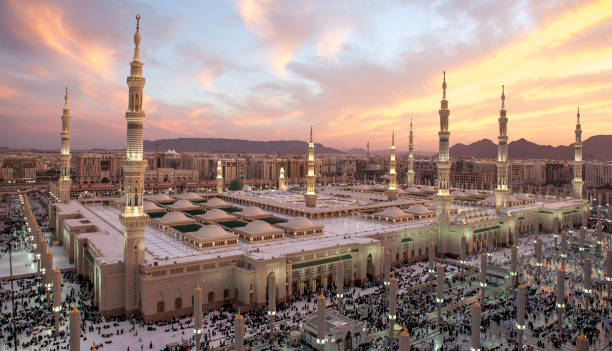
The Prophet's Mosque live
Watch the Prophet's Mosque in Medina live, the second holiest place in Islam: the five prayers, Ramadan tarawih and the architecture of Masjid an-Nabawi.
ReadYou may be wondering…
When and where was the Prophet Muhammad ﷺ born?
The Prophet Muhammad ﷺ was born in Mecca around 570 AD, during what tradition calls the Year of the Elephant, into the tribe of Quraysh. His father Abdullah died before his birth, and his mother Amina when he was six. He was raised by his grandfather Abd al-Muttalib, then by his uncle Abu Talib.
How did the revelation of the Quran begin?
At about the age of 40, while meditating in the cave of Hira near Mecca, the Prophet ﷺ was visited by the angel Jibril (Gabriel), who conveyed to him the first verses revealed: Read, in the name of your Lord who created. That event, around 610, marks the beginning of his prophetic mission and of the revelation of the Quran.
What is the Hijra?
The Hijra is the migration of the Prophet ﷺ and his companions from Mecca to Medina in 622, to escape persecution by the Quraysh. It marks year 1 of the Muslim calendar. In Medina the Prophet ﷺ founded the first Muslim community and established the Constitution of Medina, before the battle of Badr in 624.
Why is he called al-Amin?
Long before the revelation, the people of Mecca called Muhammad ﷺ al-Amin, the trustworthy, and as-Sadiq, the truthful, because of his exemplary honesty in trade and in his dealings. It was that reputation that led Khadija, a wealthy merchant, to employ him and then to marry him when he was 25.
When did the Prophet Muhammad ﷺ die?
After the peaceful conquest of Mecca in 630, where he forgave his former enemies and cleared the Kaaba of idols, the Prophet ﷺ performed the Farewell Pilgrimage. He died in Medina in 632, having delivered the Quran in full and established the pillars of Islam. He is the Seal of the Prophets: no prophet comes after him.