

The companions of the Prophet ﷺ: 50 biographies of the Sahabas
May Allah be pleased with them all — 50 complete biographies
Abu Bakr as-Siddiq
Abu Bakr ibn Abi Quhafa was the first adult man to embrace Islam, the first companion of the Prophet ﷺ and his closest friend.
When the Prophet ﷺ received the revelation and spoke of it to Abu Bakr, he did not hesitate for a single second. He said: "I bear witness that you are the Messenger of Allah." The Prophet ﷺ said later: "I never invited anyone to Islam without them hesitating, except Abu Bakr."
During the migration to Medina, Abu Bakr accompanied the Prophet ﷺ alone, hidden in the cave of Thawr for three days. Armed Meccans were looking for the Prophet ﷺ and came close to the mouth of the cave. Abu Bakr said, trembling: "If one of them looks beneath his feet, he will see us." The Prophet ﷺ answered calmly: "What do you think of two people whose third is Allah?"
He gave all his wealth for Islam. The Prophet ﷺ said: "No one has been more generous to me with his person and his wealth than Abu Bakr."
At the death of the Prophet ﷺ, when everyone was paralysed with grief, Abu Bakr said to the people the words that changed history: "Whoever among you worshipped Muhammad — Muhammad is dead. Whoever among you worshipped Allah — Allah is Living and never dies."
He became the first caliph and died two years after the Prophet ﷺ, asking to be buried in the clothes he was wearing on the day of his death, without new ones.
The Prophet ﷺ said: "If I were to take a close friend from among men, it would be Abu Bakr."
📚 Bukhari • Muslim • the Sirah d'Ibn Hicham
Umar ibn al-Khattab
Umar ibn al-Khattab was one of the most feared men in Mecca before Islam. Tall, strong, with a sharp temper, he was one of the fiercest enemies of the first Muslims.
One day he took his sword intending to kill the Prophet ﷺ. On his way he learned that his sister Fatima bint al-Khattab and his brother-in-law had become Muslims. He went to their house in a fury, struck his brother-in-law, then struck his sister, who bled.
Despite the pain, she said to him: "Do what you like. We will not leave Islam." Umar, astonished at her courage, asked to see what they were reading. She handed him the first verses of Surah Taha.
He read them. The trembling he felt was no longer anger.
He went straight to the Prophet ﷺ and pronounced the shahada. The Prophet ﷺ cried "Allahu Akbar!" for joy, followed by all the companions.
Umar was called "Al-Faruq" — the one who distinguishes truth from falsehood — by the Prophet ﷺ. He was the first to propose that the Muslims pray in public in Mecca, which had been impossible until then.
Once he became caliph, he walked through Medina at night to make sure no one was in need. He carried a sack of flour on his own back for a woman whose children were crying with hunger.
He was assassinated in 644 while leading the Fajr prayer. Before dying he said: "I regret nothing of this world, except three things I would have liked to ask the Prophet ﷺ."
The Prophet ﷺ said: "If a prophet were to come after me, it would be Umar."
📚 Bukhari • Muslim • the Sirah d'Ibn Hicham
Uthman ibn Affan
Uthman ibn Affan was one of the wealthiest men in Mecca and the most handsome of the Arabs of his time. He embraced Islam through Abu Bakr and was among the first converts.
He was called "Dhun-Nurayn" — the one of the two lights — because he married in turn two daughters of the Prophet ﷺ: Ruqayya, and then after her death, Umm Kulthum.
His generosity was legendary. During the great drought in Medina, he bought a well belonging to a man of the Ghifar tribe for a fortune and gave it freely to all the Muslims. The Prophet ﷺ said: "Uthman is in Paradise for that act."
When the Prophet ﷺ called for the army of Tabuk to be equipped, Uthman alone gave three hundred equipped camels, a thousand dinars, and fifty horses. The Prophet ﷺ took the dinars in his hands, turned them over and said: "Nothing Uthman does after today can harm him."
His greatest legacy is the compilation of the Quran in its final form — the Mushaf — which he had copied in several volumes and distributed throughout the Islamic empire to preserve the unity of the recitation.
He died a martyr in 656, killed while reading the Quran at home. His blood ran onto the holy Book.
The Prophet ﷺ said: "Uthman's modesty is such that the angels themselves are modest before him."
📚 Bukhari • Muslim • Tafsir Ibn Kathir
Ali ibn Abi Talib
Ali ibn Abi Talib grew up in the house of the Prophet ﷺ himself, taken into his care from childhood. He was the first child to embrace Islam, at about ten years of age.
On the night of the migration to Medina, the Prophet ﷺ asked Ali to sleep in his bed and cover himself with his green cloak, so that the Meccan spies would think he was still there. Ali agreed without hesitating, knowing that the armed men surrounding the house might kill him in place of the Prophet ﷺ.
He married Fatima, daughter of the Prophet ﷺ, and with her had Hassan and Hussein. Their home was of extreme poverty but of immense spiritual wealth.
Ali was known for two things above all: his knowledge and his courage. The Prophet ﷺ said of him: "I am the city of knowledge and Ali is its gate."
At the battle of Khaybar, the Prophet ﷺ said: "Tomorrow I shall give the banner to a man whom Allah and His messenger love, and who loves them." The next day, he gave it to Ali. Ali took Khaybar in a single fight.
In single combat, he threw his opponent down and raised his sword. The man spat in his face. Ali got up and sheathed his sword. When he was asked why, he said: "I did not want to kill out of personal anger."
He was assassinated in 661 during the Fajr prayer. His last words were: "By the Lord of the Kaaba, I have succeeded."
The Prophet ﷺ said: "To love Ali is faith. To hate him is hypocrisy."
📚 Bukhari • Muslim • the Sirah d'Ibn Hicham
Bilal ibn Rabah
Bilal ibn Rabah was an Abyssinian slave belonging to Umayya ibn Khalaf, one of the fiercest enemies of the young religion.
When his master learned of his conversion, he dragged him out every day into the midday sun in the desert of Mecca. He stripped him, laid him on the burning sand, placed a huge stone on his chest to smother him slowly, and said to him: "Renounce Muhammad and you will be set free."
Bilal, his breath cut short by the weight and the heat, repeated a single word: "Ahad... Ahad..." — One... One...
Abu Bakr passed by one day, deeply shaken. He went to Umayya and bought Bilal in exchange for a strong slave and a considerable sum of money. He freed him at once on the way back.
Bilal became the first muezzin of Islam. His voice, recognisable among all others, called the Muslims to prayer from the earliest years of Medina.
On the day of the conquest of Mecca, the Prophet ﷺ asked Bilal to climb onto the roof of the Kaaba to call to prayer — the most sacred building in Islam, in the city that had tried to kill him.
His voice rose from the roof of the world. The old notables of Mecca looked on, some with scorn, others with tears.
The Prophet ﷺ heard one day in a dream the footsteps of Bilal before him in Paradise and said to him: "O Bilal, by what have you gone ahead of me into Paradise? I do not enter anywhere without hearing your steps before me." Bilal answered: "I never make the call to prayer without praying two rakats afterwards."
📚 Bukhari • the Sirah d'Ibn Hicham
Abd Allah ibn Mas'ud
Abdullah ibn Mas'ud was a poor young shepherd when he met the Prophet ﷺ for the first time. He became one of the first Muslims and one of the Prophet's ﷺ closest companions.
He was so close to the Prophet ﷺ that he entered his house without asking permission, carried his sandals and went with him on his journeys. The companions said they thought he was part of his family.
His greatest claim to honour was his recitation of the Quran. The Prophet ﷺ said: "Learn the Quran from four people: Abdullah ibn Mas'ud first..."
One day the Prophet ﷺ said to him: "Recite the Quran to me." Ibn Mas'ud said: "Shall I recite to you when it was revealed to you?" The Prophet ﷺ said: "I like to hear it from the mouths of others."
Ibn Mas'ud began to recite Surah an-Nisa. When he reached the verse about the testimony of the Prophet ﷺ on the Day of Judgement, the Prophet ﷺ said: "Stop." Ibn Mas'ud looked up: tears were running silently down the face of the Prophet ﷺ.
He was also one of the first to recite the Quran publicly in Mecca, defying the Quraysh, who beat him until he bled. He came back the next day and did it again.
He passed on more than 800 hadiths from the Prophet ﷺ and trained whole generations of scholars in Kufa, in Iraq.
📚 Bukhari no. 4582 • Muslim no. 800
Abd Allah ibn Abbas
Abdullah ibn Abbas was the cousin of the Prophet ﷺ, son of al-Abbas ibn Abd al-Muttalib. He was still a child when the Prophet ﷺ died, but his thirst for knowledge made him legendary.
He used to go to the companions to learn hadiths. Sometimes he waited at their door from dawn, not daring to knock, until they came out of their own accord. When asked why, he said: "Knowledge deserves that one goes to it."
The Prophet ﷺ prayed for him: "O Allah, teach him wisdom and the interpretation of the Quran." That prayer was answered beyond all expectation.
Ibn Abbas became "Tarjuman al-Quran" — the great interpreter of the Quran. Umar ibn al-Khattab, for all his sternness, invited him to his councils alongside the great companions when he was only a teenager. When some were surprised at this, Umar read them Surah an-Nasr and asked them what it meant. No one gave the full answer. Ibn Abbas explained that it announced the coming death of the Prophet ﷺ. Umar said: "That is exactly what I understand from it."
Ibn Abbas trained hundreds of scholars and passed on an immense number of hadiths and Quranic explanations.
When he lost his sight at the end of his life, he said: "Allah has taken the light of my eyes. But He has kept the light of my heart."
📚 Bukhari • Muslim • Tirmidhi
Abd ar-Rahman ibn Awf
Abd ar-Rahman ibn Awf was one of the ten companions promised Paradise and one of the wealthiest men in Medina.
When he migrated to Medina, the Ansar offered him half their property and even one of their women in marriage, following the tradition of mutual help. Abd ar-Rahman said gratefully: "Just show me where the market is."
He started again from nothing. Within a few years he was rich once more, thanks to his genius for trade.
His generosity was extraordinary. He freed hundreds of slaves. He equipped whole armies from his own purse. One day a caravan of seven hundred camels loaded with goods came into Medina with a sound like thunder. Aisha asked what it was. She was told it was the caravan of Abd ar-Rahman ibn Awf. She said: "I heard the Prophet ﷺ say that Abd ar-Rahman would enter Paradise crawling." When he heard of it, Abd ar-Rahman said: "I want to enter Paradise standing. Allah is my witness, I give this whole caravan with its loads in the path of Allah."
The Prophet ﷺ said one day: "Abd ar-Rahman ibn Awf enters Paradise crawling" — meaning that he will be questioned at length about his wealth. But he always ends up entering.
He died at a great age leaving immense fortunes, a large part of which had already been given for Islam during his lifetime.
📚 Bukhari • Muslim • Tirmidhi
Salman al-Farisi
Salman al-Farisi was Persian, the son of a rich and respected Zoroastrian priest. From childhood he felt that his father's religion was not the truth.
One day, passing a Christian church, the prayers moved him. He decided to leave everything. His father, in despair, put him in chains. Salman escaped and joined a Christian bishop in Syria.
He served several spiritual masters, one after another, each dying and pointing him to the next. The last said to him before dying: "I no longer know anyone on this earth on the true path. But the time of a prophet has come in Arabia. He accepts gifts but not charity. Between his shoulders is the seal of prophethood."
Salman had himself taken to Arabia by a caravan. The men betrayed him and sold him as a slave. He ended up in Medina, just as the Prophet ﷺ was arriving there.
He made three tests: dates as charity — the Prophet ﷺ shared them out without eating any. Dates as a gift — he ate some. The seal between the shoulders — he saw it and began to weep.
Forty years of searching. One single moment. The truth.
He remained a slave for years more. The companions clubbed together to buy his freedom. The Prophet ﷺ said of him: "Salman is one of us, the People of the House of the Prophet."
His idea of digging a defensive ditch around Medina, taken from Persian military strategy, saved the Muslim community at the battle of the Ditch.
📚 Ahmad • the Sirah d'Ibn Hicham
Abu Dharr al-Ghifari
Abu Dharr al-Ghifari belonged to the tribe of Ghifar, known for its brigands and thieves. As soon as he heard of a prophet in Mecca, he sent his brother to find out. The information was vague. He decided to go himself.
He arrived in Mecca knowing no one, hiding by day, searching by night. He grew weak with hunger and thirst over several days.
Ali ibn Abi Talib noticed him, took him into his home without asking questions and fed him for three days.
Abu Dharr met the Prophet ﷺ and embraced Islam at once.
The Prophet ﷺ told him to keep it secret for the moment, because he was in danger in Mecca.
Abu Dharr went straight to the Kaaba and cried out before everyone: "I bear witness that there is no god but Allah and that Muhammad is His messenger!"
The Meccans threw themselves on him and beat him until he bled. Abbas ibn Abd al-Muttalib covered him with his own body, shouting that he was a man of Ghifar and that their caravans passed through their lands.
The next day, Abu Dharr did it again. Beaten again.
He went back alone to his desert without escort or protection and went on preaching Islam in his tribe. Half of them became Muslims even before the great migrations took place.
The Prophet ﷺ said of him: "The sky has not shaded nor the earth carried anyone more truthful than Abu Dharr."
📚 Bukhari no. 3861 • Muslim no. 2473
Khalid ibn al-Walid
Khalid ibn al-Walid was the most brilliant military general of his time. Before his conversion, it was he who inflicted the only military defeat on the Muslims at the battle of Uhud, by manoeuvring his cavalry round the flank.
Years later, Khalid found himself alone at night, unable to sleep. One thought kept coming back: "Muhammad ﷺ is sincere. And I have been fighting against him for years."
He went to Medina. The Prophet ﷺ saw him coming from afar and said to the companions: "Mecca is sending you the best of its sons."
When Khalid pronounced the shahada, the Prophet ﷺ said to him: "I knew that in you there was an intelligence that could lead only to good."
The Prophet ﷺ gave him the name "Sayfullah" — the Sword of Allah.
After his conversion, Khalid did not lose a single battle. He fought on more than a hundred fronts. In his last moments, lying ill and dying of an ordinary sickness, he wept and said: "I have fought in so many battles. There is not an inch of my body without a scar. And I die in my bed like an old camel. May the eyes of cowards never sleep."
Umar ibn al-Khattab wept at his death and said: "Women have become barren — they can no longer bear a man like Khalid."
📚 Bukhari • the Sirah d'Ibn Hicham
Sa'd ibn Abi Waqqas
Sa'd ibn Abi Waqqas was one of the first to embrace Islam, at about seventeen years of age. He was the first Muslim to shed blood for Islam — by wounding a Meccan who was harassing the first believers.
His mother, on learning of his conversion, refused to eat or drink to force him to apostatise. She said: "If you do not leave this religion, I shall die of hunger and people will say you killed your mother." Sa'd said to her gently but firmly: "By Allah, if you had a thousand souls and they left you one after another, I would not abandon this religion."
His mother eventually ate. Allah revealed on this subject a verse about obedience to parents and its limits.
The Prophet ﷺ said of him: "This is my maternal uncle. Let each man show me his uncle." He was proud of Sa'd.
Sa'd was also known for his invocations always being answered. The Prophet ﷺ prayed for him: "O Allah, answer Sa'd when he calls upon You." People came to beg him to pray for them.
He was the commander at the battle of Qadisiyyah which opened Persia to Islam, one of the greatest military victories in Islamic history.
He died in 674, the last of the ten companions promised Paradise to pass away, and said before dying: "Bury me in the shirt in which I fought at Badr."
📚 Bukhari • Muslim • Tirmidhi
Muadh ibn Jabal
Muadh ibn Jabal was a young man of Medina who embraced Islam before the migration of the Prophet ﷺ. He was remarkably handsome and extraordinarily intelligent.
The Prophet ﷺ loved him deeply. He said to him one day: "O Muadh, by Allah I love you." Then he taught him an invocation to say after every prayer: "O Allah, help me to remember You, to thank You and to worship You in the best way."
The Prophet ﷺ said of him: "The most learned of my community in matters of the lawful and the forbidden is Muadh ibn Jabal."
When the Prophet ﷺ sent him to Yemen as governor and teacher, he gave him this famous advice: "You are going to a people of the Book. Let the first thing you call them to be the testimony that there is no god but Allah..."
Muadh wept at their parting. The Prophet ﷺ walked beside his mount giving him his last pieces of advice. Muadh turned and said: "O Prophet of Allah, which deed will most surely bring me to Paradise?" The Prophet ﷺ answered: "You have asked me something great. It is easy for the one whom Allah makes it easy for: worship Allah without associating anything with Him, perform the prayer, pay the zakat, fast Ramadan and make the pilgrimage if you have the means."
He died of the plague in 639, at about thirty-three years of age, saying: "Welcome to death, welcome to a beloved friend come at the hour of need."
📚 Bukhari • Muslim • Tirmidhi
Abu Hurayra
Abu Hurayra embraced Islam only in the year 7 of the Hijra, just three years before the death of the Prophet ﷺ. Yet he is the companion who passed on the greatest number of hadiths — more than 5000.
How was that possible in so short a time? He explained it himself: "My brothers of the migration were busy with trade. My brothers of the Ansar were busy with their land. I was a poor man who stuck to the Prophet ﷺ in order to eat my fill. I was there when the others were not."
He often suffered from hunger. One day he sat down by the road holding his hand to his stomach. The companions thought he had a problem. The Prophet ﷺ signalled him to come into his house. He found some milk there. The Prophet ﷺ told him to gather the poor. Many came. The Prophet ﷺ said to Abu Hurayra: "Give each one a drink." Abu Hurayra gave the same bowl of milk to all of them, one after another. The last one drank and there was still some left. The Prophet ﷺ said: "Only you and I are left." Abu Hurayra drank. Then the Prophet ﷺ drank. The bowl was still full.
Some companions doubted his prodigious memory. He asked the Prophet ﷺ for a remedy against forgetting. The Prophet ﷺ asked him to spread out his cloak, made a gesture as if taking something in his hands and threw it onto the cloak. Abu Hurayra said: "I have never forgotten anything since."
📚 Bukhari • Muslim
Zayd ibn Thabit
Zayd ibn Thabit was a child of the Ansar of Medina. He learned to read and write very young — a rare thing in the Arabia of the time.
When the Prophet ﷺ arrived in Medina, Zayd was only eleven. He wanted to take part in the battle of Badr but the Prophet ﷺ sent him home because he was too young. At Uhud, at thirteen, he was accepted because he was strong and brave.
He became the chief scribe of the Prophet ﷺ, writing down the Quranic revelations as they came. The Prophet ﷺ ordered him to learn Hebrew so as to be able to read the letters of the Jewish communities. Zayd learned it in seventeen days.
His greatest service to Islam was the compilation of the Quran. Under Abu Bakr, after the battle of Yamama in which many memorisers of the Quran were killed, Abu Bakr asked him to gather the Quranic verses scattered on camel shoulder blades, flat stones and in the memories of men.
Zayd hesitated: "How can I do something the Prophet ﷺ did not do?" Abu Bakr said to him: "By Allah, it is a good thing." Zayd set to work. It was the first complete written compilation of the Quran.
Later, under Uthman, he oversaw the final copy of the Mushaf distributed throughout the Islamic empire — the same Quran we read today.
📚 Bukhari • Muslim • the Sirah d'Ibn Hicham
Aisha bint Abi Bakr
Aisha bint Abi Bakr was the daughter of Abu Bakr and the beloved wife of the Prophet ﷺ. She is one of the most important sources of Islamic knowledge.
She had an extraordinary intelligence and a prodigious memory. She corrected companions older than herself on questions of Islamic law and of hadith. Ibn Abbas said: "Whenever I held a hadith from Aisha, I found it to be sounder than what I had."
When the Prophet ﷺ was ill in his last days and wished to go to Aisha's room, the other wives each gave up their turn. He died in Aisha's arms, his head against her breast.
She passed on more than 2000 hadiths and trained whole generations of scholars who came to learn from her behind a curtain.
Her level of knowledge was such that the Prophet ﷺ said: "Take half of your religion from this Humayra" — which was his affectionate name for her.
When she was asked what the Prophet ﷺ was like at home, she answered: "He was like any man. He mended his clothes, repaired his sandals, and helped with the housework. He was never the last to smile."
She died in 678, at about sixty-six years of age, and was buried in Medina.
📚 Bukhari • Muslim
Khadija bint Khuwaylid
Khadija bint Khuwaylid was a respected businesswoman of Mecca, twice widowed, fifteen years older than the Prophet ﷺ. She was the first person to embrace Islam — before all the men, before all the companions.
When the Prophet ﷺ came back from the cave of Hira trembling with fear after the first revelation, it was she who covered him with her cloak and said to him the words that changed history: "No, by Allah, He will never humiliate you. You keep the ties of kinship, you carry the burdens of the weak, you give to those who have nothing, you honour your guests, and you help in the trials of truth."
She believed in him without hesitating. She supported him with her immense fortune when the Meccans boycotted the Muslims. Her wealth fed the young community through years of hardship.
She bore him all his children — six according to tradition: Qasim, Abdullah, Zaynab, Ruqayya, Umm Kulthum and Fatima.
She died in 619 after ten years of trials at the side of the Prophet ﷺ. Her death broke him. He called that year "the Year of Sorrow."
Years after her death, the Prophet ﷺ still sent gifts to her friends. When Aisha was jealous of this, he said: "She believed in me when people called me a liar. She supported me when people deprived me of everything."
Allah sent her His greetings through Jibril and promised her a house of pearl in Paradise.
📚 Bukhari no. 3 • Muslim no. 160
Fatima az-Zahra
Fatima az-Zahra was the beloved daughter of the Prophet ﷺ and the only one of his children to outlive him. She was so close to him that he said: "Fatima is a part of me. Whoever angers her angers me."
Her life in Medina was one of extreme poverty despite her noble birth. She ground the grain herself until her hands blistered. One day she went to her father to ask for a servant. He said to her: "I shall teach you something better. Say SubhanAllah thirty-three times, Alhamdulillah thirty-three times, and Allahu Akbar thirty-four times before sleeping." That wird has borne her name ever since.
With Ali, she gave away their food three nights in a row — to a poor man, an orphan, a captive — while going hungry themselves. Allah revealed verses of the Quran about them.
When the Prophet ﷺ was close to death, he called her and whispered something in her ear. She wept. Then he whispered something again. She smiled. After his death she was asked what he had said. She answered: "He first told me he was going to die. Then he told me I would be the first of his family to follow him."
She died six months after him, the first of his family to follow him, just as he had said. She was about twenty-seven years old.
📚 Bukhari • Muslim • Tirmidhi
Hassan ibn Ali
Hassan ibn Ali was the eldest son of Ali ibn Abi Talib and Fatima az-Zahra, and thus the grandson of the Prophet ﷺ.
The Prophet ﷺ loved Hassan and Hussein with an extraordinary love. He sometimes broke off during the prayer to let them climb on his back, lengthening his prostration so as not to disturb them.
He said: "Hassan and Hussein are the masters of the youth of Paradise."
Hassan resembled the Prophet ﷺ from the head to the waist, and Hussein from the waist to the feet.
Once an old woman offered him a date. Hassan was about to eat it when the Prophet ﷺ told him not to, because sadaqa was not permitted to the people of his house. Hassan spat the date out.
He was known for his gentle character and his extreme generosity. He made the pilgrimage on foot twenty-five times although he owned mounts. He gave away all his property twice in his life.
After the assassination of his father Ali, he became caliph. To avoid civil war among the Muslims, he made the painful choice of handing the caliphate to Muawiya ibn Abi Sufyan, saying: "I gave up power so that the blood of the Muslims would not be shed."
The Prophet ﷺ had said: "This son of mine is a lord. Perhaps Allah will reconcile through him two great groups of Muslims." That prophecy came true.
📚 Bukhari • Tirmidhi no. 3768
Hussein ibn Ali
Hussein ibn Ali was the second son of Ali and Fatima, and the cherished grandson of the Prophet ﷺ.
The Prophet ﷺ said of him: "Hussein is of me and I am of Hussein. Allah loves whoever loves Hussein." He also said of him and Hassan: "O Allah, I love them, so love them and love whoever loves them."
Hussein lived in Medina until 680. The people of Kufa in Iraq sent him thousands of letters begging him to come and join them to lead the Muslim community, which was suffering under an unjust rule.
He set out with his family and a small group of companions — fewer than a hundred people. But the people of Kufa, under pressure from the governor Ubaydallah ibn Ziyad, went back on their word.
Hussein found himself alone at Karbala, in Iraq. He refused to give allegiance to what he considered an injustice. On 10 Muharram 61 of the Hijra, he was surrounded by an army of several thousand soldiers.
Before the fighting he said: "If you believe in no religion and do not fear the Day of Judgement, then at least be free men in this world."
He died a martyr, along with most of the men who were with him. His head was sent to Damascus.
His death shook the Islamic world and still marks it today. The Prophet ﷺ had wept on the day of his birth, saying to Fatima: "Jibril has told me that my community will kill him."
📚 Bukhari • Tirmidhi • the Sirah
Hamza ibn Abd al-Muttalib
Hamza ibn Abd al-Muttalib was the uncle of the Prophet ﷺ and the most feared warrior in Mecca.
His conversion was sudden and overwhelming. One day he was coming back from hunting and a servant woman told him that Abu Jahl had insulted and struck his nephew Muhammad ﷺ in the street. Hamza, without thinking, went to find Abu Jahl in his assembly, struck him with his bow before everyone and said: "You insult my nephew? I am of his religion!"
That day, he had said he was a Muslim before he truly was one. But that word bound him. He went to the Prophet ﷺ and embraced Islam sincerely.
He became the physical protection of the first Muslims in Mecca. His entry into Islam greatly strengthened the young community.
At the battle of Badr he was one of the most brilliant heroes. At Uhud he fought with extraordinary bravery until he was killed as a martyr by Wahshi, a javelin thrower hired by Hind bint Utba.
His body was mutilated after his death — his chest opened and his liver eaten by Hind.
When the Prophet ﷺ saw his body, he wept in a way the companions had never seen. He said: "O uncle, may your death not be wept over in vain! You are the lion of Allah and the lion of His messenger."
The Prophet ﷺ gave him the title "Sayyid ash-Shuhada" — the Lord of the martyrs.
📚 Bukhari • the Sirah d'Ibn Hicham
Talha ibn Ubaydallah
Talha ibn Ubaydallah was one of the ten companions promised Paradise and one of the first to embrace Islam.
His generosity was proverbial. He gave away his wealth so freely that people called him "Talha the generous" and "Talha the beneficent." One day he received seven hundred thousand dirhams. By the next morning there was nothing left — he had given it all away during the night.
His most famous moment was the battle of Uhud. When the Muslim ranks were broken and some were fleeing, Talha stayed beside the Prophet ﷺ to protect him. He received twenty-four wounds that day. His hand was left paralysed from shielding the face of the Prophet ﷺ from an arrow.
The Prophet ﷺ said of him: "Whoever wants to see a martyr walking on the earth, let him look at Talha ibn Ubaydallah."
He also said: "Talha has earned Paradise" — in reference to Uhud.
His bravery was legendary but it went with extreme gentleness in daily life. Poor people came knocking at his door and always went away with something.
He died at the battle of the Camel in 656, at about sixty years of age, in a civil strife he himself regretted having taken part in.
📚 Bukhari • Tirmidhi
Az-Zubayr ibn al-Awwam
Az-Zubayr ibn al-Awwam was a first cousin of the Prophet ﷺ — his father was the uncle of the Prophet's mother — and the son-in-law of Abu Bakr, having married his daughter Asma.
He embraced Islam at about fifteen years of age, among the very first. His mother Safiyya bint Abd al-Muttalib beat him to force him to apostatise. He refused.
The Prophet ﷺ said to him: "Every prophet has a disciple, and my disciple is az-Zubayr."
He was one of the six members of the shura — the consultative council — appointed by Umar to choose his successor, a mark of his high standing among the companions.
At the battle of Badr he was one of the first to charge at the enemy. The Prophet ﷺ said of him: "Az-Zubayr is the son of my aunt and my disciple."
His bravery went with a deep faith. It is reported that he rarely slept at night, spending his hours in prayer.
His generosity was such that he died in debt — not through mismanagement but because he used to take people's deposits as loans so that he could use them for good and not lose the money entrusted to him, and then repay them in full.
He died at the battle of the Camel in 656, after withdrawing from the fighting in tears, regretting having taken part in it.
📚 Bukhari • Tirmidhi
Abu Ubayda ibn al-Jarrah
Abu Ubayda ibn al-Jarrah was known for his extreme gentleness, his humility and his absolute discretion.
The Prophet ﷺ said of him: "Every community has a trustworthy man. And the trustworthy man of this community is Abu Ubayda ibn al-Jarrah."
He was one of the ten companions promised Paradise.
At the battle of Badr he found himself facing his own father, who was fighting in the ranks of the disbelievers. His father was looking for him in particular in order to kill him. Abu Ubayda avoided him several times. Finally his father placed himself directly in his path. Abu Ubayda killed him.
Allah revealed on this subject a verse about those who prefer Allah to their own kin in faith.
Abu Ubayda never boasted of this. It was not he who told of it — it was others who came to know.
He was appointed governor of Syria and commander of the armies. Under his command Damascus, Homs and many other cities were opened to Islam. His way of governing was a model of justice and gentleness.
He died in the great plague of Amwas in 639, which he could have fled. Umar ordered him to leave to protect himself. He answered: "I do not flee from the decree of Allah. And I will not leave my army to die without me." He died of the plague with his soldiers.
Umar wept at his death and said: "I would have wished to be of his worth."
📚 Bukhari no. 3744 • Muslim no. 2419
Ubayy ibn Ka'b
Ubayy ibn Ka'b was an Ansari of Medina and the best reciter of the Quran among the companions.
The Prophet ﷺ said to him one day: "Allah has commanded me to recite the Quran to you." Ubayy said, surprised and moved: "Allah mentioned me by name?" The Prophet ﷺ said: "Yes." Ubayy began to weep.
The Prophet ﷺ then recited Surah al-Bayyina to him.
He was one of the four whom the Prophet ﷺ expressly named to teach the Quran. Umar ibn al-Khattab used to say: "Ubayy is the master of the Muslims in matters of the Quran."
His knowledge of the Quran was so precise that he was the reference in any doubt over a reading or a pronunciation. He devoted his whole life to recitation, teaching and transmission.
He was also known for his frankness. When something seemed to him incorrect, he said so directly, even to the caliphs.
He died between 640 and 656 according to the sources, having given his whole life to the knowledge and the transmission of the Book of Allah.
📚 Bukhari • Muslim • Tirmidhi
Abu Musa al-Ash'ari
Abu Musa al-Ash'ari came from Yemen. He embraced Islam in his own country, then migrated to Abyssinia, and then to Medina.
He was known for two exceptional things: the beauty of his voice in reciting the Quran, and his wisdom in judgement.
The Prophet ﷺ said to him one day: "O Abu Musa, you have been given a mizmar — a flute — among the mizmar of the family of Dawud." This meant that his voice in reciting the Quran was like the beauty of the Psalms of David.
When Abu Musa learned that the Prophet ﷺ had heard him reciting, he said: "If I had known you were listening to me, I would have made my recitation even more beautiful."
He was sent to Yemen as governor and teacher. His wisdom in judgement was recognised by all.
During the strife between Ali and Muawiya, he acted as arbiter for Ali in the mediation at Dumat al-Jandal. His decision, taken in good faith, was turned against him by the diplomatic skill of Amr ibn al-As, who represented Muawiya.
He died between 662 and 672 according to the sources, leaving an immense legacy in Islamic knowledge and Quranic recitation.
📚 Bukhari • Muslim
Ammar ibn Yasir
Ammar ibn Yasir was the son of Yasir and Sumayya, the first martyrs of Islam.
His family was among the most persecuted in Mecca. His father Yasir and his mother Sumayya were tortured to death by Abu Jahl. Sumayya was the first martyr of Islam — an elderly woman, killed by a spear thrust from Abu Jahl.
Ammar himself was tortured until he uttered words of disbelief in order to be released. He came back in tears to the Prophet ﷺ, who wiped his face and said to him: "If they do it again, do the same again." The Quran revealed on this subject a verse about compulsion in matters of faith.
The Prophet ﷺ said: "Ammar is filled with faith to his bones." And: "Ammar will be killed by the rebellious group."
That prophecy came true at the battle of Siffin in 657. When Ammar was killed in the ranks of Ali, Muawiya asked what it meant. Amr ibn al-As answered: "It is we who killed him by bringing him onto this battlefield." The companions in both camps were shaken.
Ammar died at about ninety years of age, still fighting. He said before his death: "By Allah, even if they strike me until I reach the Palm of Hajar, I would know that those who fight me are in the wrong."
📚 Muslim • Tirmidhi • the Sirah d'Ibn Hicham
Zayd ibn Haritha
Zayd ibn Haritha was captured as a child in a raid and sold as a slave in Mecca. Khadija gave him to the Prophet ﷺ, who freed him at once and adopted him as his own son.
When Zayd's natural father found him and came to take him back, Zayd was given the choice. He said to the Prophet ﷺ: "I shall never choose anyone over you." His father was astounded. The Prophet ﷺ was so moved that he presented him to the people as his son. People called him Zayd ibn Muhammad — Zayd son of Muhammad.
Then the Quran revealed that an adopted child cannot bear the name of his adoptive father. Zayd became Zayd ibn Haritha again. But he remained among the closest to the Prophet ﷺ.
He was the first commander of the great Islamic expeditions. The Prophet ﷺ entrusted him with the first large armies.
His son Usama ibn Zayd was also deeply loved by the Prophet ﷺ, who said to him: "You are my beloved, son of my beloved."
Zayd was killed as a martyr at the battle of Mu'ta in 629, in present-day Jordan, in the first confrontation with the Byzantines. He was the commander in chief. The Prophet ﷺ, in Medina, announced his death to his companions with tears in his eyes even before the messengers arrived, saying that he saw him in a vision.
📚 Bukhari • Muslim • the Sirah d'Ibn Hicham
Abu Darda
Abu Darda embraced Islam in Medina. Before his conversion he was a prosperous merchant and had in his house an idol that he worshipped.
When he embraced Islam, the first thing he did was to break his idol himself. He said: "What good did you ever do me, you who were only wood!"
The Prophet ﷺ established a brotherhood between him and Salman al-Farisi. Salman visited him and found his wife Umm Darda in plain clothes. He asked her why. She said: "Your brother Abu Darda has no desire for this world." When Abu Darda came home, he prepared a meal for Salman and told him to eat. Salman said he would eat only if Abu Darda ate with him, since he was fasting. Abu Darda ate.
At night, Abu Darda got up to pray. Salman told him to go back to bed. In the last third of the night, Salman said to him: "Now get up." They prayed together. In the morning, Salman said to him: "Your Lord has rights over you. Your body has rights over you. Your family has rights over you. Give each their due." Abu Darda reported this to the Prophet ﷺ, who said: "Salman has spoken the truth."
He became one of the greatest scholars of his time and was sent to Syria to teach. He used to say: "I love death because it brings me nearer to my Lord. I love illness because it wipes away my sins. I love poverty because it teaches me humility."
📚 Muslim • Tirmidhi • Abu Dawud
Sa'd ibn Muadh
Sa'd ibn Muadh was the chief of the Aws tribe in Medina, one of the two great tribes of the Ansar.
He embraced Islam through Mus'ab ibn Umayr, the ambassador the Prophet ﷺ sent to Medina before the migration. His conversion brought with it that of almost his whole tribe.
He was a man of great presence, tall, handsome, respected by all. His word carried considerable weight in Medina.
At the battle of the Ditch he was wounded in the arm by an arrow. He prayed: "O Allah, do not let me die before my eyes are satisfied concerning the Banu Qurayza." His wound stopped bleeding just long enough for him to see the matter of the Banu Qurayza settled according to his judgement, and then his wounds opened again.
He died of his wounds shortly afterwards. The Prophet ﷺ said: "The throne of the Most Merciful trembled at the death of Sa'd ibn Muadh."
Seventy thousand angels attended his funeral according to the hadith.
His mother wept after his death. The Prophet ﷺ said to her: "Your tears do him no harm. But know that Paradise has opened for him."
📚 Bukhari no. 3803 • Muslim no. 2466
Uwais al-Qarni
Uwais al-Qarni was a Yemeni who had never met the Prophet ﷺ in his lifetime. He could not make the journey for fear of leaving his aged mother alone.
Yet the Prophet ﷺ spoke of him to his companions: "A man from Yemen, called Uwais ibn Amir, will come with the reinforcements from Yemen. He had leprosy. He prayed to Allah, who healed him completely except for a patch the size of a dirham. He has a mother to whom he is deeply devoted. If he were to swear an oath by Allah, Allah would honour it. If you can ask him to intercede for you, do so."
Umar ibn al-Khattab, once he became caliph, looked for Uwais in every caravan from Yemen. One day he found him — a simple man, with nothing striking about him.
Umar asked him to call upon Allah for him. Uwais said: "You are the caliph, it is you who should pray for me." Umar said: "No. The Prophet ﷺ himself commanded me to ask you."
Uwais prayed for him, tears in his eyes.
He died at the battle of Siffin, fighting in the ranks of Ali, in 657.
His story teaches that nearness to Allah does not depend on fame, nor even on meeting the Prophet ﷺ in person. A heart sincere and devoted to Allah and to his mother had raised him to a rank that famous scholars had not reached.
📚 Muslim no. 2542
Ja'far ibn Abi Talib
Ja'far ibn Abi Talib was the elder brother of Ali and a cousin of the Prophet ﷺ. He resembled him so closely in face and in character that the Prophet ﷺ said to him: "You resemble me in face and in character."
He was one of the first to embrace Islam and among the first to migrate to Abyssinia with a group of Muslims to escape the persecutions of Mecca.
It was there that he brought about one of the most eloquent moments in Islamic history. The Christian king of Abyssinia, the Negus, summoned the Muslims to hear what they believed. The envoys of the Quraysh wanted them expelled.
Ja'far stood up and recited before the court the Quranic verses about Maryam and Issa ﷺ. The Negus and his whole court wept. He said: "The difference between what you say about Issa and what your Book says is no greater than this" — drawing a line on the ground. He refused to hand them over to the Meccans.
At the battle of Mu'ta in 629 against the Byzantines, Ja'far commanded the army after Zayd ibn Haritha. He fought until he lost the right hand that held the banner. He seized it with his left. He lost his left hand. He clutched it to his chest with both stumps until he fell, riddled with fifty wounds — all of them at the front.
The Prophet ﷺ announced his death in Medina before the messengers arrived, with tears in his eyes. He said: "Ja'far is now flying in Paradise with two wings of light in place of his two arms." That is why he was called "Dhu al-Janahayn" — the one with two wings.
📚 Bukhari • Tirmidhi • the Sirah d'Ibn Hicham
Mus'ab ibn Umayr
Mus'ab ibn Umayr was the most elegant and most pampered young man in Mecca. His parents were rich, he wore the finest clothes in Mecca, perfumed with the best incense of the East.
He embraced Islam in secret, for fear of his mother. When she found out, she drove him from the house and cut him off from everything. The best-dressed man in Mecca now wore patched clothes. The companions wept to see him, so well did they remember what he had been.
The Prophet ﷺ sent him to Medina before the migration — the first ambassador of Islam. His task: to teach the Quran and call people to Islam. His gentleness, his good looks and his knowledge opened doors to him. Within a year, almost all of Medina had become Muslim. It was he who prepared the ground for the great migration.
At the battle of Uhud he carried the banner of the Prophet ﷺ. When his right hand was cut off, he held it with his left. When his left hand was cut off, he clutched it to his chest with both arms. He fell a martyr.
The Prophet ﷺ stopped before his body and recited: "Among the believers are men true to what they promised Allah..."
To shroud him there was only one cloth — too short to cover both his head and his feet. The Prophet ﷺ said to cover the head and to lay grass over the feet.
📚 Bukhari • the Sirah d'Ibn Hicham
Abdullah ibn Rawaha
Abdullah ibn Rawaha was one of the chiefs of the Ansar and one of the three commanders appointed by the Prophet ﷺ for the expedition of Mu'ta — with Zayd ibn Haritha and Ja'far ibn Abi Talib.
He was also a gifted poet whose verses defended Islam and the Prophet ﷺ. He and Hassan ibn Thabit were the two great pens of the Muslim community.
Before leaving for Mu'ta, he said goodbye to his family. His cousin wept. He said to her: "Do not weep. This is what I ask of Allah: the strike of a spear or an arrow, a wound that goes in and comes out, so that people may say on meeting me: here is a man whom Allah has honoured."
At Mu'ta, after Zayd and Ja'far had fallen, the banner passed to Abdullah. He hesitated for a moment — not out of fear, but reproaching himself for that hesitation. He said to himself: "O my soul, I swear you will get down from this horse to fight, whether you want to or not."
He got down. He fought until he died a martyr.
The Prophet ﷺ said of him and his two companions: "Zayd took the banner and fell a martyr. Ja'far took it and fell a martyr. Abdullah ibn Rawaha took it and fell a martyr." Tears were running down his face.
📚 Bukhari • the Sirah d'Ibn Hicham
Usama ibn Zayd
Usama ibn Zayd was the son of Zayd ibn Haritha, the adopted son of the Prophet ﷺ. He grew up in the house of the Prophet ﷺ and was loved by him like a grandson.
The Prophet ﷺ said of him: "He is my beloved, son of my beloved." He often carried him on his shoulders with Hassan ibn Ali, saying: "O Allah, I love them, so love them."
At eighteen, the Prophet ﷺ gave him command of an army for an expedition — which caused murmurs among some older companions who thought him too young. The Prophet ﷺ, ill on his deathbed, insisted that this army set out under the command of Usama, showing his complete confidence in him.
After the death of the Prophet ﷺ, Abu Bakr, now caliph, kept Usama in command despite the internal crises. He said: "I do not take down a banner that the Prophet ﷺ tied with his own hands."
Usama was also known for his frankness. He once interceded with the Prophet ﷺ for a noblewoman condemned for theft. The Prophet ﷺ said to him firmly: "The peoples before you perished because they applied the punishment to the poor and spared the noble. By Allah, if Fatima daughter of Muhammad stole, I would cut off her hand."
📚 Bukhari • Muslim
Hudhayfah ibn al-Yaman
Hudhayfah ibn al-Yaman held a unique position among the companions: the Prophet ﷺ had entrusted him with the names of the hypocrites of Medina — a list no one else knew.
When companions died, Umar ibn al-Khattab watched to see whether Hudhayfah attended their funeral. If he was there, Umar prayed for them. If he stayed away, Umar refrained — for fear the person was on the list.
Umar asked him one day directly: "Am I on the list?" Hudhayfah answered: "No. And I shall answer no one else after you."
He was known for his keen perception of the fitnas — the trials that divide Muslims. The Prophet ﷺ had described to him in detail the troubles to come and how to recognise them. The companions came to consult him about the signs of the times.
He asked the Prophet ﷺ questions that others did not dare to ask — about evil, about the hypocrites, about future trials. He said: "People used to ask the Prophet ﷺ about good. I used to ask him about evil, for fear of falling into it."
He died in 656 after learning of the assassination of Uthman, and said: "This is the beginning of what the Prophet ﷺ described to me."
📚 Bukhari • Muslim
Abdullah ibn Umar
Abdullah ibn Umar was the son of the caliph Umar ibn al-Khattab. He embraced Islam as a child and migrated to Medina with his father.
His devotion to following every detail of the Sunnah of the Prophet ﷺ was legendary. The companions said he was among those who followed the way of the Prophet ﷺ most rigorously.
He stopped at the same places as the Prophet ﷺ on his journeys. He performed his ablutions under the same tree as him. He prayed in the same spot. He was asked one day why he stopped at a particular place along the way. He answered: "I saw the Prophet ﷺ stop here."
He passed on more than 2600 hadiths and was one of the greatest references for the Sunnah for decades.
His generosity was deep and discreet. He freed many slaves and regularly fed the poor at his home.
He lived a very long time — until about 693 — and was one of the last great references among the companions. After the strife of his time, he refused to take sides in the civil wars between Muslims, saying: "I shall not fight one who says La ilaha illa Allah."
When he was told that death was near, from a poisoned arrow, he said: "What a fine wish, to die a martyr!"
📚 Bukhari • Muslim
Anas ibn Malik
Anas ibn Malik was ten years old when his mother Umm Sulaym brought him to the Prophet ﷺ on his arrival in Medina and said: "O Prophet of Allah, this is Anas, my son. He will serve you." The Prophet ﷺ accepted him.
Anas served the Prophet ﷺ for ten years, until his death. He said: "In the ten years I served him, he never said to me 'why did you do this' or 'why did you not do that'."
The Prophet ﷺ said to him one day: "O my little son." Only once in ten years did he let slip something the Prophet ﷺ had asked him to do. He did not do it straight away. When he went, children were playing outside and had distracted him. The Prophet ﷺ found him there and said to him with a smile: "Anas, did you go where I sent you?" He answered: "Yes, I am going now." He said nothing more.
His mother asked the Prophet ﷺ to pray for her son. He said: "O Allah, increase his wealth and his children and give him a long life." Anas lived more than a hundred years, had many children, and his lands were among the most fertile in Basra.
He passed on more than 2000 hadiths and was one of the great references of his generation. He died around 712 — one of the last companions to pass away.
📚 Bukhari • Muslim
Umm Salama
Umm Salama — whose real name was Hind bint Abi Umayya — was among the first to embrace Islam with her husband Abu Salama.
They migrated together to Abyssinia and then to Medina. During one attempt at migration, members of her tribe tore her son from her arms. She spent a year separated both from her husband and from her child, weeping every day.
When her husband Abu Salama died of his wounds from Uhud, she said the invocation the Prophet ﷺ had taught her: "Inna lillahi wa inna ilayhi raji'un. Allahumma ujurni fi musibati wakhluf li khayran minha — To Allah we belong and to Him we return. O Allah, reward me in this affliction and replace it for me with something better."
She would then say: "Who could be better than Abu Salama?" The Prophet ﷺ asked for her hand. She married him.
She was known for her wisdom and her intelligence. It was she who gave the Prophet ﷺ the decisive advice at the treaty of Hudaybiyya: when the companions hesitated to shave their heads and offer the sacrifice without having entered Mecca, she told the Prophet ﷺ to do it himself first. He did. Everyone followed at once.
She passed on many hadiths and lived until about 680, one of the last Mothers of the believers to pass away.
📚 Bukhari • Muslim • Abu Dawud
Asma bint Abi Bakr
Asma bint Abi Bakr was the eldest daughter of Abu Bakr and the sister of Aisha. She was called "Dhat an-Nitaqayn" — the woman of the two belts — because she tore her belt in two to tie up the provisions of the Prophet ﷺ and her father during their secret migration to Medina.
She was one of the bravest and most determined of the women companions.
While her father was migrating with the Prophet ﷺ, she stayed in Mecca, pregnant. Abu Jahl came to her house in a rage, demanding to know where her father was. She answered that she did not know. He slapped her so hard that she lost her earring. She said nothing.
She migrated alone on foot to Medina, pregnant, and gave birth at Quba at the entrance to Medina — her son Abdullah ibn az-Zubayr was the first child born among the Emigrants in Medina.
Her son Abdullah ibn az-Zubayr was killed in Mecca in 692 after a long siege. Someone came to tell her of her son's death. She was very old and almost blind. She said: "If he died defending what he believed to be right, then may Allah have mercy on him."
She died a few days later, at almost a hundred years of age. The Prophet ﷺ had prayed for her, saying: "O Allah, bless her in her wealth and her children."
📚 Bukhari • the Sirah d'Ibn Hicham
Umm Sulaym
Umm Sulaym — whose real name was Rumaytha or Sahla — was an Ansari woman of Medina known for her courage, her wisdom and her unshakeable faith.
When Abu Talha asked for her hand, she was a widow with a son. He was not yet a Muslim. She said to him: "A man like you is not refused. But you are a disbeliever and I am a Muslim. I will not marry you. If you embrace Islam, that will be my dowry — I ask nothing else of you."
Abu Talha embraced Islam sincerely. That was her dowry.
Her son Anas ibn Malik was the servant of the Prophet ﷺ.
One day her son fell gravely ill and died while Abu Talha was away. She washed the child, prepared him, and waited for her husband's return. When he came home, she served him a meal, then said gently: "If someone entrusts something to another and takes it back, has he the right?" He said: "No." She said: "Our son was entrusted to us and Allah has taken him back."
Abu Talha was broken. The Prophet ﷺ, when he was told, prayed for them. Umm Sulaym conceived that very night and gave birth to a blessed son.
The Prophet ﷺ visited her often and called her "my aunt".
📚 Bukhari • Muslim • Tirmidhi
Amr ibn al-As
Amr ibn al-As was one of the most intelligent and most skilful men of his time. Before Islam, he was one of the most formidable diplomats of the Quraysh.
He embraced Islam in the year 8 of the Hijra, shortly before the conquest of Mecca, along with Khalid ibn al-Walid. The Prophet ﷺ welcomed them joyfully, saying: "Mecca has sent us its best sons."
The Prophet ﷺ entrusted him with several important diplomatic missions, recognising his political shrewdness.
He led the expedition of Dhat al-Salasil and several others. At the battle of Mu'ta, when the three commanders fell as martyrs, Khalid ibn al-Walid took command and managed to save the army. Amr played an important part in that orderly retreat.
His most famous feat was the conquest of Egypt in 641-642 under the caliphate of Umar. With a small army he took Byzantine Egypt in a series of brilliant battles. He became its first governor.
He is one of the founders of the city of Fustat, forerunner of modern Cairo.
The end of his life was marked by the civil strife. He supported Muawiya at the battle of Siffin and played a decisive part in the arbitration.
He died in Egypt in 664, governor until his death, and said as he was dying: "O Allah, You commanded me and I disobeyed. You forbade me and I transgressed. I am not innocent, but nor do I despair."
📚 Bukhari • Muslim • the Sirah
Muawiya ibn Abi Sufyan
Muawiya ibn Abi Sufyan embraced Islam at the conquest of Mecca in 630. His father Abu Sufyan and his mother Hind had been among the most determined enemies of Islam.
The Prophet ﷺ forgave him, as he did all the Meccans, and said: "Go, you are free." Muawiya became one of his scribes, charged with writing down the revelations and the correspondence of the Prophet ﷺ.
The Prophet ﷺ said of him: "O Allah, guide him and make him a guide."
Umar ibn al-Khattab appointed him governor of Syria, a post he held for twenty years with great competence. He built up the Islamic navy and launched the first maritime expeditions of Islam towards Cyprus.
After the death of the caliph Uthman, he refused to give allegiance to Ali until the murderers of Uthman had been brought to justice. This led to the battle of Siffin and to the first great strife of Islam.
After the caliphate was handed over by Hassan ibn Ali, he became the first Umayyad caliph and ruled for twenty years over an immense empire, from Spain to present-day Afghanistan.
His rule was remarkable for its political skill and its stability. He used to say: "I do not draw my sword when my tongue is enough. And I do not pull on the thread that binds me to men — if someone pulls hard, I let go. And when he slackens, I take it up again."
📚 Bukhari • Muslim • Tirmidhi
Abdullah ibn az-Zubayr
Abdullah ibn az-Zubayr was the son of az-Zubayr ibn al-Awwam and of Asma bint Abi Bakr, and thus the grandson of Abu Bakr. He was the first child born among the Muslim emigrants in Medina — his birth was an immense joy for the community.
The Prophet ﷺ was the first to hold him in his arms. He chewed a date and placed it in his mouth — the first food Abdullah tasted. He said: "This child is brave."
He grew up in the circle of the Prophet ﷺ and was taught by the best. He was known for his extraordinary bravery, his generosity and his strictness in practice.
After the death of Muawiya, he refused to recognise his son Yazid as caliph, judging him unworthy. He took refuge in Mecca and ruled a rival caliphate for almost ten years, recognised by most of the Islamic world.
He was besieged in Mecca by the Umayyads. His own mother Asma, almost blind and very old, urged him to hold out to the end: "A death in honour is better than a life in disgrace."
He fell fighting in 692. The Umayyad general Hajjaj ibn Yusuf had his body crucified. His mother Asma went there and said: "Is it not time to take this rider down from his mount?"
The Prophet ﷺ had said of him: "Two precious men of Quraysh will be killed unjustly."
📚 Bukhari • the Sirah d'Ibn Hicham
Abu Ayyub al-Ansari
Abu Ayyub al-Ansari — Khalid ibn Zayd — was the host of the Prophet ﷺ on his arrival in Medina.
When the she-camel of the Prophet ﷺ stopped in Medina, every family of the Ansar wanted him to stay with them. The Prophet ﷺ said: "Leave the she-camel. She will stop where Allah commands her." She stopped in front of the house of Abu Ayyub.
The Prophet ﷺ lived in his house for seven months, until his own mosque was built. Abu Ayyub and his wife slept on the ground floor and the Prophet ﷺ upstairs. One night, Abu Ayyub knocked over a jar of water. He said to his wife: "The Prophet ﷺ is below! Let us put our bodies between him and the ceiling so that the water does not run down on him." They spent the night standing, drying the floor with their only bedding rug.
His devotion to jihad was extraordinary. He took part in almost every battle. Even in great old age he refused to stay at home.
He died in 674 during the first siege of Constantinople by the Islamic armies. He was over eighty. He asked to be buried as close as possible to the city walls. The soldiers saw to it.
His tomb is today in Istanbul — Eyüp Sultan — and is one of the most visited places in Turkey.
📚 Bukhari • Muslim • the Sirah d'Ibn Hicham
Abu Hudhayfa ibn Utba
Abu Hudhayfa ibn Utba was the son of Utba ibn Rabi'a, one of the chiefs of the Quraysh and one of the most determined enemies of Islam. Yet Abu Hudhayfa embraced Islam among the first and migrated to Abyssinia.
His story is a moving one: at the battle of Badr, his father Utba and his uncle were in the ranks of the disbelievers. His father was killed that day. Abu Hudhayfa was seen with a darkened face after the battle. The Prophet ﷺ asked him what was wrong. He said: "I do not rejoice at my father's death. But I thought he had intelligence and I hoped he would turn towards the good. He came to a bad end and that saddens me." The Prophet ﷺ prayed for him.
He was one of the great memorisers of the Quran. He had a freedman named Salim — who became famous as Salim Mawla Abi Hudhayfa — whom he loved like a son.
The two died together as martyrs at the battle of Yamama in 632, during the wars of apostasy, fighting the false prophets.
Salim carried the banner. When his hand was cut off, the Muslims fell back. Abu Hudhayfa cried out to him: "O Salim, what have you done with the Quran?" — urging him to hold on. Those were almost his last words.
The battle of Yamama was so deadly among the memorisers of the Quran that it brought about the first compilation of the Quran under Abu Bakr.
📚 Bukhari • the Sirah d'Ibn Hicham
Salim Mawla Abi Hudhayfa
Salim was a freedman of Persian origin who was set free by Abu Hudhayfa and adopted by him. He became one of the four whom the Prophet ﷺ expressly named to teach the Quran.
The Prophet ﷺ said: "Learn the Quran from four people: Abdullah ibn Mas'ud, Salim Mawla Abi Hudhayfa, Muadh ibn Jabal and Ubayy ibn Ka'b."
This hadith is remarkable: Salim was a freedman, not an Arab by birth, not a Qurayshi. He was named first among the four. This shows that mastery of the Quran wipes out every distinction of birth or origin.
His recitation was known for its beauty and its precision. Companions who had emigrated from Mecca made the journey to learn from him in Medina.
Umar ibn al-Khattab, shortly before his death, said regretfully at his passing: "If Salim were still alive, I would have had no hesitation in naming him for the caliphate." This testimony from the caliph Umar about a non-Arab freedman is one of the most eloquent in Islamic history.
He died a martyr at Yamama in 632, alongside Abu Hudhayfa, holding the banner even after his hand had been cut off.
His story is a lasting lesson: in Islam, nobility is measured by knowledge of the Quran and by uprightness, not by origin.
📚 Bukhari no. 3758 • Muslim
Hafsa bint Umar
Hafsa bint Umar was the daughter of the caliph Umar ibn al-Khattab. She married the Prophet ﷺ after the death of her first husband Khunays ibn Hudhafa, who died of his wounds after the battle of Badr.
She was known for her strong character — a trait she had from her father — and for her devotion to prayer and fasting.
The Prophet ﷺ gave her a place of honour among his wives. Jibril said to him: "Hafsa is one who fasts much and prays much. She will be your wife in Paradise."
Her most important role in the history of Islam was to be the keeper of the first written Mushaf. After the compilation of the Quran under Abu Bakr, the original manuscript was entrusted to Abu Bakr, then to Umar, then to Hafsa after her father's death. It was from this manuscript kept in her house that Uthman had the official copies of the Quran made and distributed throughout the empire.
She was also a lettered woman — a rare thing at the time. She could read and write.
She died in 665, having lived long enough to see Islam spread from Spain to Afghanistan.
Her place in the history of Islam is unique: she was at once the wife of the Prophet ﷺ, the daughter of the second caliph, and the keeper of the sacred text that has come down to us.
📚 Bukhari • Muslim • Abu Dawud
Abu Bakr ibn Abd ar-Rahman
Abu Bakr ibn Abd ar-Rahman was the son of the great companion Abd ar-Rahman ibn Awf. He was called "Rahib Quraysh" — the Monk of Quraysh — for his extraordinary asceticism and the time he gave to worship.
He fasted often, prayed at night, and lived with great sobriety despite his family's wealth.
He became one of the seven great jurists of Medina — "the Seven Fuqaha" — who formed the legal reference of the community after the death of the direct companions of the Prophet ﷺ.
His knowledge of fiqh — Islamic law — was recognised as one of the soundest in Medina. He settled complex questions with a precision his contemporaries admired.
He lost his sight towards the end of his life but went on teaching and giving legal opinions. His students came to his house to learn.
His story stands for an important side of the sahaba that is often forgotten: beyond the warriors and the great politicians, there were companions and their sons who gave their whole lives to knowledge, to teaching and to the preservation of Islamic fiqh.
He died around 94 of the Hijra — about 712 of the Christian era.
📚 the Sirah • Tabaqat Ibn Sa'd
Abu Dujana al-Ansari
Abu Dujana — Simak ibn Kharasha — was an Ansari warrior of Medina known for his extraordinary bravery and his flamboyant style of fighting.
At the battle of Uhud, the Prophet ﷺ held up a sword and asked: "Who will take this sword with its right?" Companions stood up. The Prophet ﷺ hesitated. Abu Dujana said: "What is its right, O Prophet of Allah?" He said: "To strike with it until it bends."
Abu Dujana said: "I take it with its right." The Prophet ﷺ gave it to him.
He stepped out of the ranks with a red headband on his head — a sign of bravery unto death — and began to walk between the ranks with a swaggering gait.
The Prophet ﷺ said: "That is a gait Allah dislikes except in this setting."
That day, Abu Dujana fought with such fury that the enemy fled from him. He shielded the Prophet ﷺ with his own body when the arrows rained down, taking the arrows in his back without moving.
His physical courage went with a deep humility. He once said: "There are only three things I am proud of: I do not speak of what does not concern me, my heart holds no grudge against any Muslim, and I have never eaten a meal without inviting someone to share it."
📚 Muslim • the Sirah d'Ibn Hicham
The Companions of the Prophet Muhammad ﷺ — the Sahabas
The Sahabas (صحابة) are the companions who kept the company of the Prophet Muhammad ﷺ and believed in him. Their 50 biographies are a model of faith, sacrifice and devotion for all Muslims. The first four caliphs — Abu Bakr as-Siddiq, Umar ibn al-Khattab, Uthman ibn Affan and Ali ibn Abi Talib — are known as the Khulafa ar-Rashidun (the rightly guided caliphs).
Among the most famous companions: Bilal ibn Rabah, the first muezzin of Islam, a martyr of torture for his faith. Aisha bint Abi Bakr, the greatest scholar of the community, who passed on thousands of hadiths. Khadija bint Khuwaylid, first wife and first believer. Khalid ibn al-Walid, the Sword of Allah, undefeated in all his battles. Abu Hurayra, the greatest transmitter of hadiths with more than 5000 hadiths reported.
Find the complete biographies and the hadiths of each companion in the app Muslim Alim. Discover too thehistory of the Prophets, the Islamic stories drawn from the hadiths, and the peoples of the Quran.
Also worth reading
All of Prophets
Timeline of Islam
A timeline of Islamic history: the 25 prophets of the Quran, the Rightly Guided Caliphs, the Umayyad, Abbasid and Fatimid dynasties and the Ottoman Empire.
Read
The Prophet's Farewell Sermon
Arabic text and translation of the Prophet Muhammad's ﷺ farewell sermon at Arafat during the Farewell Pilgrimage: equality, women's rights, Quran and Sunnah.
Read
The Prophet Adam
The story of the Prophet Adam in Islam: his creation from clay, the prostration of the angels, the refusal of Iblis, the slip, the repentance and his offspring.
Read
The Prophet Al-Yasa
Who is the Prophet Al-Yasa (Elisha) in Islam? His two mentions in the Quran, his mission to the Children of Israel and his link with the Prophet Ilyas.
Read
Famous hadiths of the Prophet
The best-known hadiths of the Prophet Muhammad ﷺ translated into English with their source: intention, sincerity, lawful and unlawful, patience, anger…
Read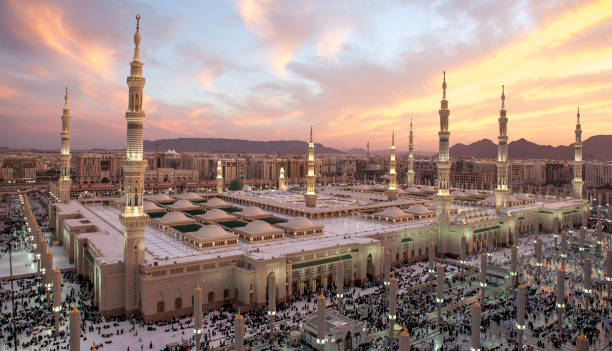
The Prophet's Mosque live
Watch the Prophet's Mosque in Medina live, the second holiest place in Islam: the five prayers, Ramadan tarawih and the architecture of Masjid an-Nabawi.
ReadYou may be wondering…
Who are the Sahabas?
The Sahabas, or companions, are the men and women who met the Prophet Muhammad ﷺ, believed in him and died as Muslims. They passed on the Quran and the hadiths to the generations that followed. Muslims say after their name radiya Allahu anhu, may Allah be pleased with him, as a mark of respect.
Who was the first to embrace Islam?
Khadija bint Khuwaylid, wife of the Prophet ﷺ, was the first person to believe in his mission, before any of the men. Among the adult men, Abu Bakr as-Siddiq was the first to embrace Islam, without hesitating for a second. Ali ibn Abi Talib, then about ten years old, was the first child to become a Muslim.
Who are the four rightly guided caliphs?
The four rightly guided caliphs (al-Khulafa ar-Rashidun) are the companions who led the Muslim community after the death of the Prophet ﷺ: Abu Bakr as-Siddiq, Umar ibn al-Khattab called al-Faruq, Uthman ibn Affan called Dhun-Nurayn, and Ali ibn Abi Talib. All four are among the ten companions promised Paradise.
Which companion reported the most hadiths?
Abu Hurayra, who became a Muslim in the year 7 of the Hijra, only three years before the death of the Prophet ﷺ, is the companion who passed on the greatest number of hadiths, more than 5000. He explained that he gave all his time to the Prophet ﷺ, while the others were busy with trade or their land. Aisha and Ibn Abbas are also major sources.
Which women are among the companions of the Prophet ﷺ?
The women companions of the Prophet ﷺ include major figures such as Khadija, the first Muslim, Aisha bint Abi Bakr, a scholar who corrected older companions on questions of law and hadith, and Fatima bint al-Khattab, sister of Umar, whose faith helped bring about his conversion. The wives of the Prophet ﷺ bear the title Mothers of the believers.