
 Get the Muslim Alim app
How to perform the Muslim prayer: a step-by-step guide
Number of rakahs per prayer
A detailed guide to the prayer
Opening Position (Qiyam)
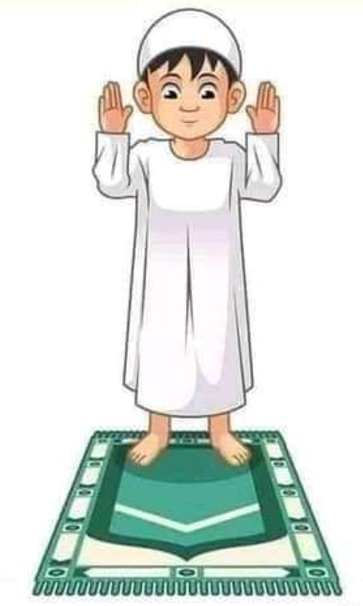
Allahu Akbar
Opening Position (Qiyam)
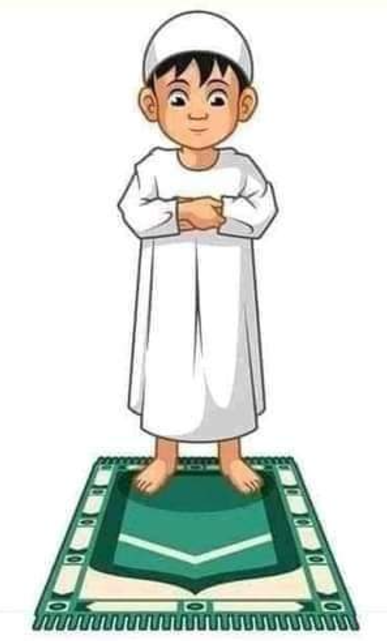
Reciting Al-Fatiha
Reciting Al-Ikhlas
Bowing (Ruku)
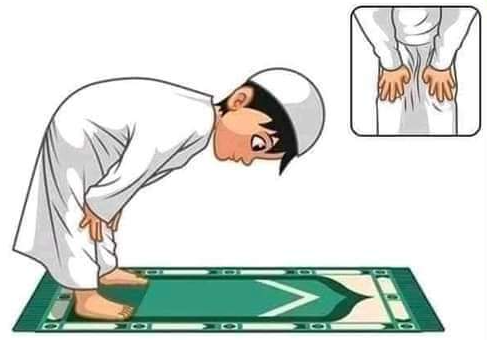
Subhana Rabbiyal Adhim (3 times)
Glory and praise to my Lord, the Almighty (3 times)
Opening Position (Qiyam)
Opening Position (Qiyam)
Prostration (Sujud)
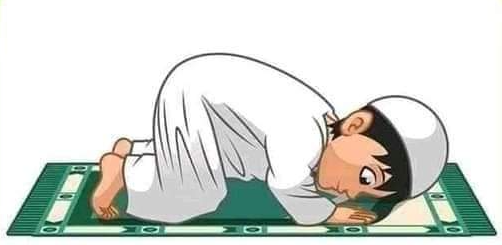
Subhana Rabbiyal A'la (3 times)
God is the Greatest
Glory to my Lord, the Most High (3 times)
Sitting Position (Tawarruk)
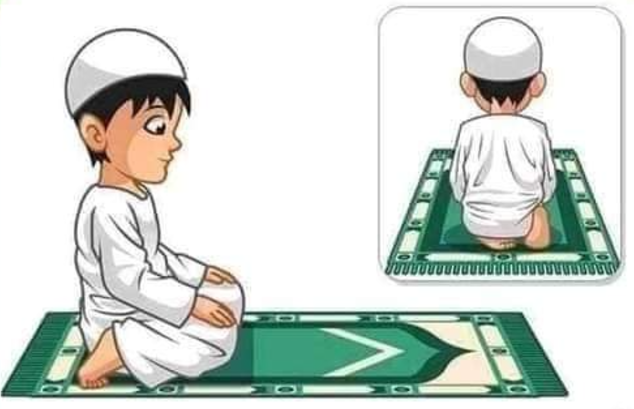
O my Lord, forgive me
Prostration (Sujud)
Subhana Rabbiyal A'la (3 times)
God is the Greatest
Glory to my Lord, the Most High (3 times)
Second rakah
Standing for the 2nd rakah
2. Reciting Al-Fatiha
Reciting An-Nas
Bowing (Ruku)
Subhana Rabbiyal Adhim (3 times)
Glory and praise to my Lord, the Almighty (3 times)
Opening Position (Qiyam)
Opening Position (Qiyam)

Prostration (Sujud)
Subhana Rabbiyal A'la (3 times)
God is the Greatest
Glory to my Lord, the Most High (3 times)
Sitting Position (Tawarruk)
O my Lord, forgive me
Prostration (Sujud)
Subhana Rabbiyal A'la (3 times)
God is the Greatest
Glory to my Lord, the Most High (3 times)
Short tashahhud
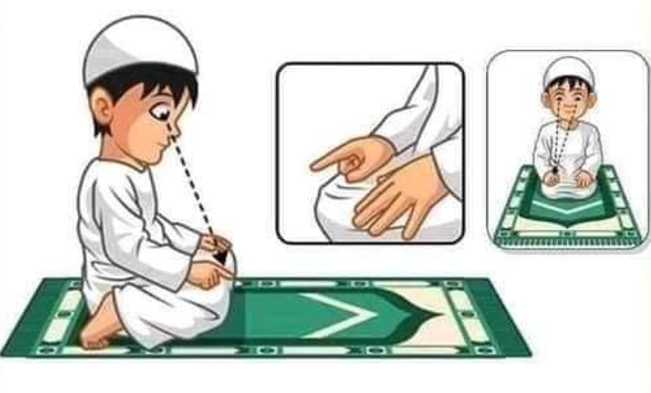
I bear witness that there is no deity but Allah, and I bear witness that Muhammad is His servant and His messenger
Third rakah
Standing for the 3rd rakah
Bowing (Ruku)
Subhana Rabbiyal Adhim (3 times)
Glory and praise to my Lord, the Almighty (3 times)
Opening Position (Qiyam)
Opening Position (Qiyam)
Prostration (Sujud)
Subhana Rabbiyal A'la (3 times)
God is the Greatest
Glory to my Lord, the Most High (3 times)
Sitting Position (Tawarruk)
O my Lord, forgive me
Prostration (Sujud)
Subhana Rabbiyal A'la (3 times)
God is the Greatest
Glory to my Lord, the Most High (3 times)
Fourth rakah
Standing for the 4th rakah
Bowing (Ruku)
Subhana Rabbiyal Adhim (3 times)
Glory and praise to my Lord, the Almighty (3 times)
Opening Position (Qiyam)
Opening Position (Qiyam)
Prostration (Sujud)
Subhana Rabbiyal A'la (3 times)
God is the Greatest
Glory to my Lord, the Most High (3 times)
Sitting Position (Tawarruk)
O my Lord, forgive me
Prostration (Sujud)
Subhana Rabbiyal A'la (3 times)
God is the Greatest
Glory to my Lord, the Most High (3 times)
Full tashahhud
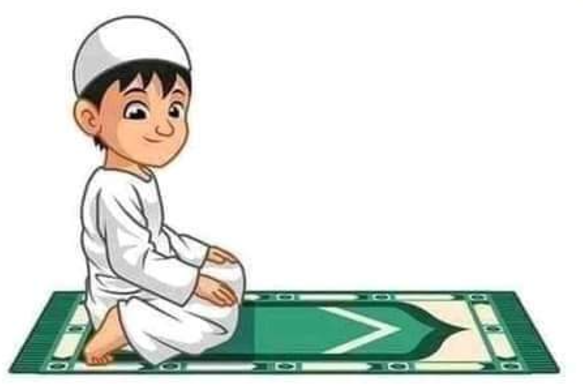
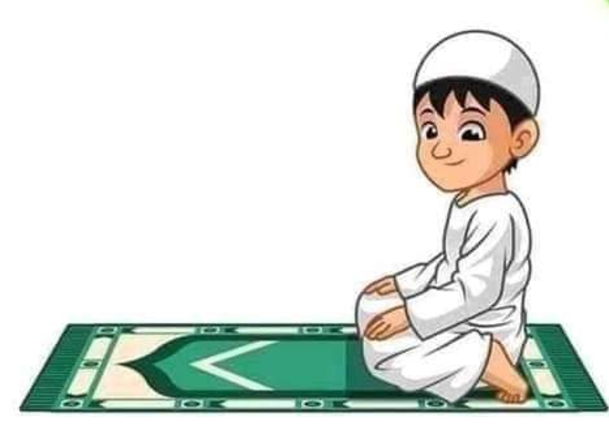
Final Salam
## How to perform the Muslim prayer: a practical guide for beginners
The Muslim prayer, called salah, is one of the five pillars of Islam. It is made up of several precise steps that every Muslim must learn and master. Before beginning, you must first check the prayer times and face Mecca using a direction guide.
Preparation begins with the ablutions (wudu). You wash the hands, the mouth, the nose, the face and the arms up to the elbows, wipe the head with wet hands and wash the feet. This purification, spiritual and physical, is required before every prayer.
Once purified, stand facing the direction of Mecca on a clean mat. The prayer begins with the takbir : raise your hands level with your ears saying "Allahu Akbar". Then recite Surah Al-Fatiha followed by another surah of the Quran.
The movements then follow on: the bowing (ruku), where you bend forward keeping your hands on your knees, then the prostration (sujud), where the forehead touches the ground. Each position has its own particular words.
The number of rakahs (cycles) varies with the time of day: two for Fajr, four for Dhuhr and Asr, three for Maghrib and four for Isha. The prayer ends with the tashahhud, seated, then the final greetings, turning the head to the right and then to the left.
Learning the supplications in Arabic takes time and patience. Audio support makes that memorising far easier and helps correct pronunciation.
Also worth reading
All of Prayer & worship
The Adhan and the Iqamah
Learn the Adhan and the Iqamah phrase by phrase: Arabic text, transliteration, English translation and audio, including the extra line of the Fajr call.
Read
Tawaf and Sa'i counter
Count your 7 circuits around the Kaaba and your 7 trips between Safa and Marwah without losing track. A free counter for Hajj and Umrah, with rite reminders.
Read
Digital dhikr counter
A free dhikr counter for reciting SubhanAllah, Alhamdulillah, Allahu Akbar, La ilaha illa Allah and Astaghfirullah, with a running total of your dhikr.
Read
Dua of the last 10 nights
The dua to recite during the last 10 nights of Ramadan and Laylat al-Qadr: Allahumma innaka Afuwwun, in Arabic, transliteration and English, with its source.
ReadDua for breaking the fast
The dua to recite at iftar: Dhahaba adh-dhama'u in Arabic, transliteration and English, its source in Abu Dawud, and the right moment to say it.
Read
Essential duas in Arabic and English
Over 30 authentic duas sorted by situation: morning and evening, sleep, meals, travel, protection, illness, study. Arabic text, transliteration and English.
ReadYou may be wondering…
How many rakahs is each prayer?
The obligatory prayers are 2 rakahs for Fajr, 4 for Dhuhr, 4 for Asr, 3 for Maghrib and 4 for Isha. To these are added voluntary (sunnah) prayers: 2 before Fajr, 4 before and 2 after Dhuhr, 2 after Maghrib, then Witr after Isha (often 3 rakahs). See the prayer times for each salah.
How do I perform ablutions before prayer?
Ablutions (wudu) mean washing the hands, rinsing the mouth and nose, washing the face and the arms up to and including the elbows, wiping the head (and the ears) with wet hands, then washing the feet up to the ankles. It all begins with the intention and Bismillah. The schools differ over which acts are obligatory and which recommended, and over order and repetition, but these basic steps are agreed on.
What are the steps of a rakah?
Standing (qiyam), you say Allahu Akbar, recite Al-Fatiha and then another surah. Then comes the bowing (ruku) with Subhana Rabbiyal Adhim, rising with Sami Allahu liman hamidah, Rabbana wa lakal hamd, then two prostrations (sujud) with Subhana Rabbiyal A'la, separated by a sitting position. The guide shows each position with a picture and audio.
How do I end the prayer?
After the last prostration, you sit for the tashahhud (At-tahiyyatu lillah…), followed by the prayer upon the Prophet ﷺ (Allahumma salli ala Muhammad…). You end with the salam: turn your head to the right saying As-salamu alaykum wa rahmatullah, then to the left. In prayers of 3 or 4 rakahs, a short tashahhud is also recited after the second rakah.
Can the prayer be performed in English?
Most scholars hold that Al-Fatiha and the formulas of the prayer must be said in Arabic, since the salah is an act of worship handed down in that language; a beginner learns gradually and may, in the meantime, recite what they know and make dhikr. Personal supplications outside the prayer may be made in English. The audio on this page helps in learning the correct pronunciation.