
 Get the Muslim Alim app
The Farewell Sermon of the Prophet Muhammad ﷺ at Arafat
A daily source of wisdom
The last sermon of the Prophet Muhammad ﷺ on Mount Arafat
On 9 March 632, during his Farewell Pilgrimage, the Prophet Muhammad ﷺ gave his last sermon on Mount Arafat before more than 100,000 pilgrims. That historic address marks the completion of the Quranic revelation and sums up the foundational principles of Islam.
In this memorable sermon, the Prophet ﷺ insists on the equality of all believers. He declares that no Arab is superior to a non-Arab, and no white person superior to a black person, except through piety. That universal equality then becomes a central pillar of Muslim faith.
The Messenger of Allah ﷺ also recalls how important it is to respect the rights of women and to treat them well. He speaks of the duty to return what has been entrusted to us and to be just in commercial dealings. These teachings sit perfectly alongside the authentic hadiths that have reached us.
The Prophet ﷺ closes his address by asking those present to pass his message on to those who were not there. He then asks the question that has become famous: "Have I conveyed the message?" The crowd answers yes. It was at that very moment that the Quranic verse "This day I have perfected your religion" was revealed, as recorded in the Quran.
This spiritual testament of the Prophet ﷺ remains a timeless reference. His words on justice, brotherhood and individual responsibility still inspire Muslims the world over. The sermon at Arafat is a perfect summary of Islamic values and of how they apply in daily life.
Also worth reading
All of Prophets
The Prophet Adam
The story of the Prophet Adam in Islam: his creation from clay, the prostration of the angels, the refusal of Iblis, the slip, the repentance and his offspring.
Read
The Prophet Al-Yasa
Who is the Prophet Al-Yasa (Elisha) in Islam? His two mentions in the Quran, his mission to the Children of Israel and his link with the Prophet Ilyas.
Read
The Prophet Ayyub
The story of the Prophet Ayyub (Job) in Islam: the loss of his wealth, his children and his health, his prayer, his healing and his patience rewarded.
Read
The Prophet Shuayb
The story of the Prophet Shuayb in Islam: sent to the people of Madyan, he condemns cheating in weights and measures. Quranic verses, punishment and lessons.
Read
Famous hadiths of the Prophet
The best-known hadiths of the Prophet Muhammad ﷺ translated into English with their source: intention, sincerity, lawful and unlawful, patience, anger…
Read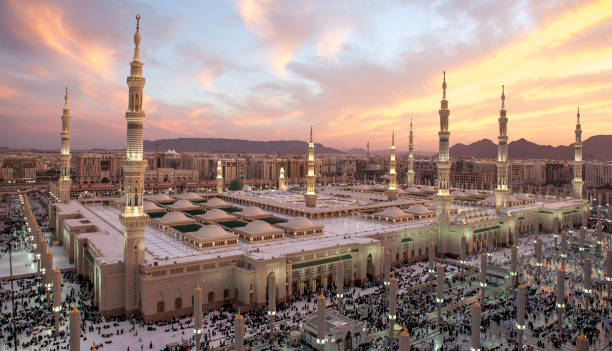
The Prophet's Mosque live
Watch the Prophet's Mosque in Medina live, the second holiest place in Islam: the five prayers, Ramadan tarawih and the architecture of Masjid an-Nabawi.
ReadYou may be wondering…
What is the Prophet's ﷺ farewell sermon?
The farewell sermon (Khutbat al-Wada) is the address the Prophet Muhammad ﷺ gave on Mount Arafat during his Farewell Pilgrimage, in the year 10 of the Hijra (632). In it he says he may not see the pilgrims again and sums up the essential principles of Islam. It is regarded as his spiritual testament to the whole community.
What does the Prophet ﷺ say in his farewell sermon?
The Prophet ﷺ recalls that life and property are sacred, abolishes the usury of the pre-Islamic period, urges fear of Allah regarding women, proclaims that the believers are brothers and that another's property is lawful only with their consent. He ends by leaving two references so that no one goes astray: the Book of Allah and the Sunnah of His Prophet.
Does the sermon at Arafat speak of equality between people?
Yes. According to the reported versions of this sermon, the Prophet ﷺ declares that no Arab is superior to a non-Arab, nor a white person to a black person, except through piety. That proclamation of equality between all believers, whatever their origin, has become one of the most quoted passages of the farewell sermon and a foundational principle of Islamic brotherhood.
Which verse was revealed during the Farewell Pilgrimage?
According to tradition, it was at Arafat, during the Farewell Pilgrimage, that this verse was revealed: This day I have perfected for you your religion and completed My favour upon you (Surah Al-Ma'idah, verse 3). After asking the pilgrims whether he had conveyed the message, the Prophet ﷺ charged them to pass it on in turn to those who were absent.
Where can I read the Prophet's farewell sermon in Arabic and English?
This page presents the main passages of the Prophet's ﷺ farewell sermon with the original Arabic text and its English translation, passage by passage. To read further, see the life of the Prophet Muhammad ﷺ and the authentic hadiths that record his teachings.