
 Get the Muslim Alim app
Ibrahim (Abraham), father of the prophets and friend of Allah
Life of the Prophet Ibrahim (Abraham)
Birth and Historical Setting
- Born in Ur (present-day Iraq) around 1996 BC
- Son of Azar (or Terah), a maker of idols
- Lived under the rule of the tyrant king Nimrod
- Born into a polytheistic society that worshipped the stars and idols
The Search for Truth
Discovering Monotheism
- Observing the heavenly bodies (stars, moon, sun)
- Deep reflection on creation
- Rejection of polytheism
- Divine revelation confirming his faith
Confronting His People
- Destroying the idols of the temple
- Dialogue with his father
- Confrontation with King Nimrod
- The miracle of the fire turned to coolness
Journeys and Trials
Travels
- Departure from Ur with Sarah and Lut
- A stay in Egypt
- Settling in Palestine
- Journeys to Mecca
Building the Kaaba
- Raised with his son Ismail
- The first place of monotheistic worship
- The institution of the Hajj
- The spiritual centre of Islam
The Great Trials
The Sacrifice
- The vision of sacrificing his son
- Total submission to the divine will
- Replaced by a ram
- Commemorated every year at Eid al-Adha
Legacy and Influence
Titles of Honour
- Khalil Allah (the intimate friend of Allah)
- Abu al-Anbiya (Father of the Prophets)
- Al-Hanif (the pure monotheist)
In the Quran
- Named in 25 surahs
- An example of pure faith
- A model of submission to Allah
- A source of moral teaching
Main Teachings
- Pure monotheism (Tawhid)
- Submission to Allah
- The importance of family
- Perseverance through trials
- Hospitality and generosity
The full story of the Prophet Ibrahim in Islam and his teachings
Ibrahim, peace be upon him, holds a central place in Islam. He is regarded as the father of the prophets and the friend of Allah. His story teaches us absolute faith and total submission to the Creator.
Born in Babylon, Ibrahim grew up in a polytheistic setting. From a young age he questioned the worship of idols practised by his people and by his father Azar. His search for truth led him naturally to the oneness of Allah. That spiritual quest marks the beginning of his prophetic mission.
The most striking episode remains the sacrifice Allah asked of him. Ibrahim received in a dream the command to sacrifice his beloved son Ismail. Without hesitating, he accepted this divine trial. At the decisive moment, Allah replaced Ismail with a ram, rewarding the unshakeable faith of His servant. The event is commemorated every year at Eid al-Adha.
Ibrahim and Ismail together built the Kaaba in Mecca, the first house dedicated to the worship of Allah on earth. That building is a founding moment for mankind. Muslims the world over turn towards it in their daily prayers.
The Quran names Ibrahim in many verses, underlining his exceptional qualities. He is described as a patient, grateful man, constantly turning to Allah. His descendants include the prophets Isaac, Jacob and Muhammad, peace be upon them all.
Ibrahim's legacy lives on today in religious practice. His example of total devotion has inspired believers down the centuries. The lessons of his life remain a precious guide for strengthening our relationship with Allah and deepening our understanding ofIslam.
Also worth reading
All of Prophets
The Prophet Ismail
Discover the story of the Prophet Ismail: Zamzam springing up beneath his feet, the trial of the sacrifice, and building the Kaaba with his father Ibrahim.
Read
The Prophet's Farewell Sermon
Arabic text and translation of the Prophet Muhammad's ﷺ farewell sermon at Arafat during the Farewell Pilgrimage: equality, women's rights, Quran and Sunnah.
Read
The Prophet Adam
The story of the Prophet Adam in Islam: his creation from clay, the prostration of the angels, the refusal of Iblis, the slip, the repentance and his offspring.
Read
The Prophet Al-Yasa
Who is the Prophet Al-Yasa (Elisha) in Islam? His two mentions in the Quran, his mission to the Children of Israel and his link with the Prophet Ilyas.
Read
Famous hadiths of the Prophet
The best-known hadiths of the Prophet Muhammad ﷺ translated into English with their source: intention, sincerity, lawful and unlawful, patience, anger…
Read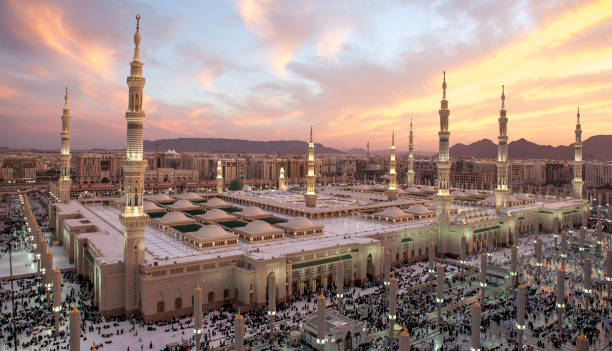
The Prophet's Mosque live
Watch the Prophet's Mosque in Medina live, the second holiest place in Islam: the five prayers, Ramadan tarawih and the architecture of Masjid an-Nabawi.
ReadYou may be wondering…
Who is the Prophet Ibrahim in Islam?
Ibrahim (Abraham) is one of the greatest prophets of Islam, called Khalil Allah, the intimate friend of Allah, and father of the prophets. Born into an idol-worshipping society, he rejected the worship of the stars and of idols to worship Allah alone. His sons Ismail and Ishaq were prophets, and his line includes Yaqub, Musa, Isa and Muhammad ﷺ.
Why is Ibrahim called Khalil Allah?
The Quran states: And Allah took Ibrahim as an intimate friend (Surah An-Nisa, verse 125). The title Khalil Allah expresses the highest degree of love and closeness to Allah, earned by his pure faith (hanif), his total submission and his steadfastness through trials. He is also called Abu al-Anbiya, the father of the prophets.
Which son was Ibrahim to sacrifice?
Ibrahim saw in a dream that he was sacrificing his son, who accepted in submission; at the moment of the sacrifice, Allah ransomed him with a ram (Surah As-Saffat, verses 102-107). The Quran does not name the son. Most Muslim scholars hold that it was Ismail, although some of the early scholars leaned towards Ishaq. The event is commemorated every year at Eid al-Adha.
Did Ibrahim build the Kaaba?
Yes. The Quran relates that Ibrahim raised the foundations of the Kaaba with his son Ismail (Surah Al-Baqarah, verse 127), calling on Allah to accept their work. Allah then ordered him to call people to the pilgrimage (Surah Al-Hajj, verse 27). The rites of the Hajj still recall Ibrahim, Hajar and Ismail today.
How was Ibrahim saved from the fire?
After breaking his people's idols, Ibrahim was sentenced to be thrown into a huge blaze. Allah commanded: O fire, be coolness and safety for Ibrahim (Surah Al-Anbiya, verse 69), and he came out unharmed. That miracle showed his people, and the tyrant king of the time, how powerless their idols were before Allah.