

Ramadan Mubarak: 20 images to share for the blessed month
The blessed month of fasting and of the Holy Quran
🌙 The merits of Ramadan
Allah says: "The month of Ramadan is that in which the Quran was revealed, a guidance for the people and clear proofs." (Al-Baqarah 2:185)
The Prophet ﷺ said: "When Ramadan comes, the gates of Paradise are opened, the gates of Hell are closed and the devils are chained."
📚 Sahih Bukhari & Muslim
✨ The 5 pillars of Ramadan
🌅 Suhoor — the meal before dawn (sunnah)
🌙 Iftar — breaking the fast at sunset
📖 Tilawah — reading the Quran (aim: 1 juz a day)
🕌 Tarawih — the special night prayers of Ramadan
🌟 Laylat al-Qadr — the Night of Decree in the last 10 nights
O Allah, let us reach Ramadan and accept our deeds
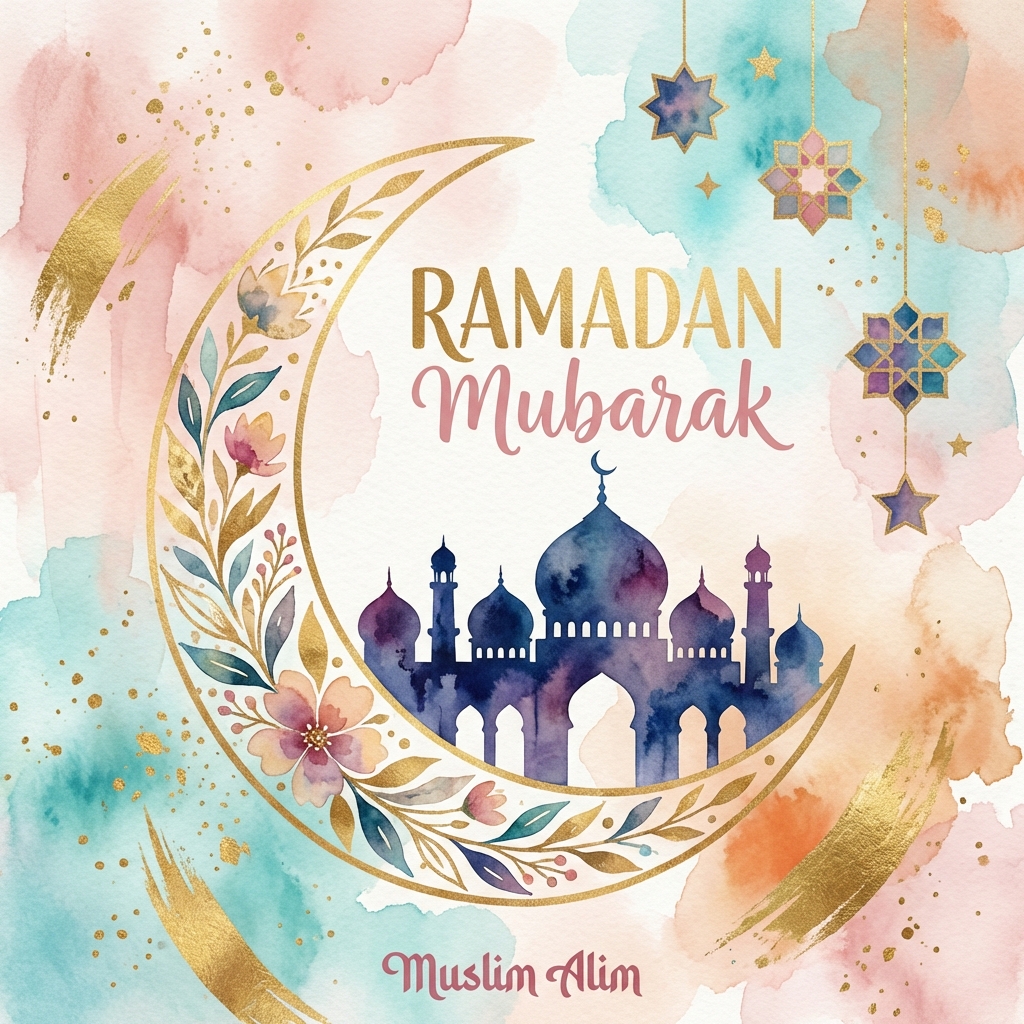
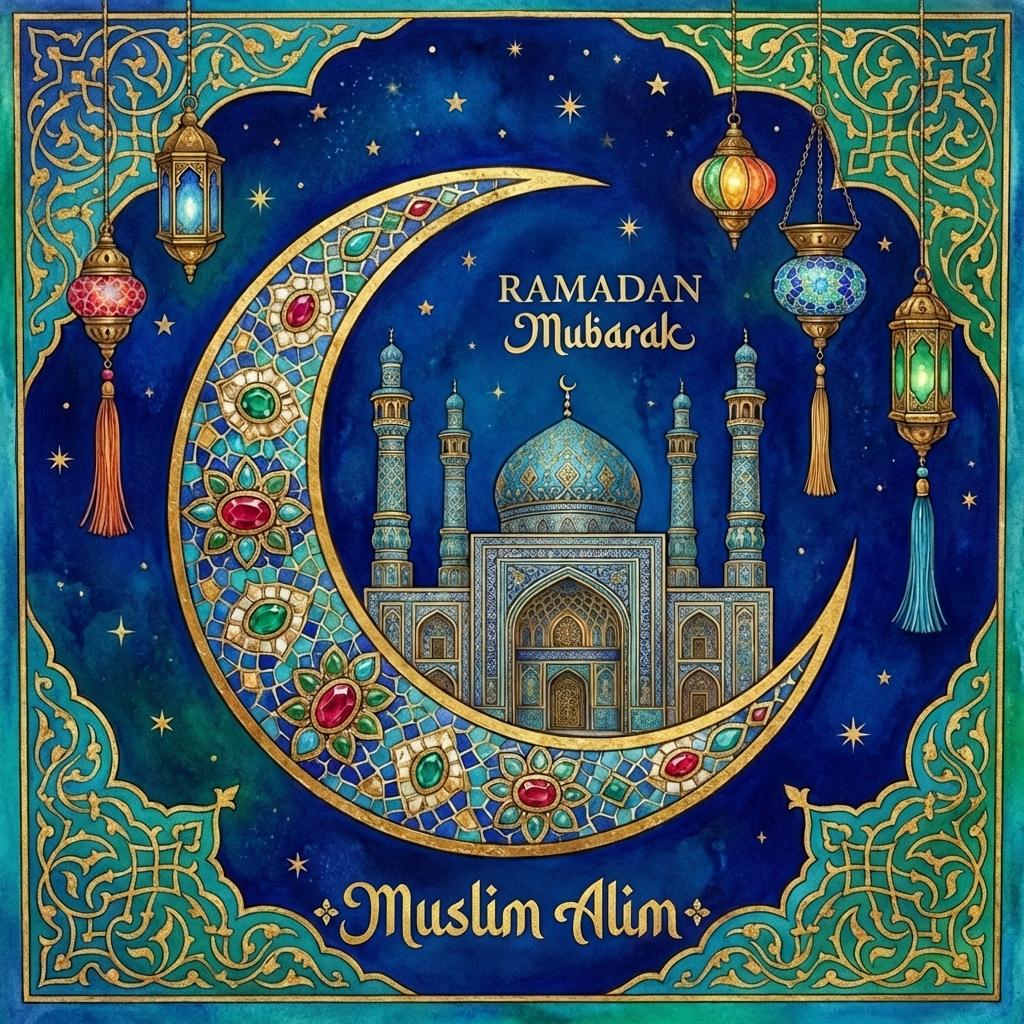
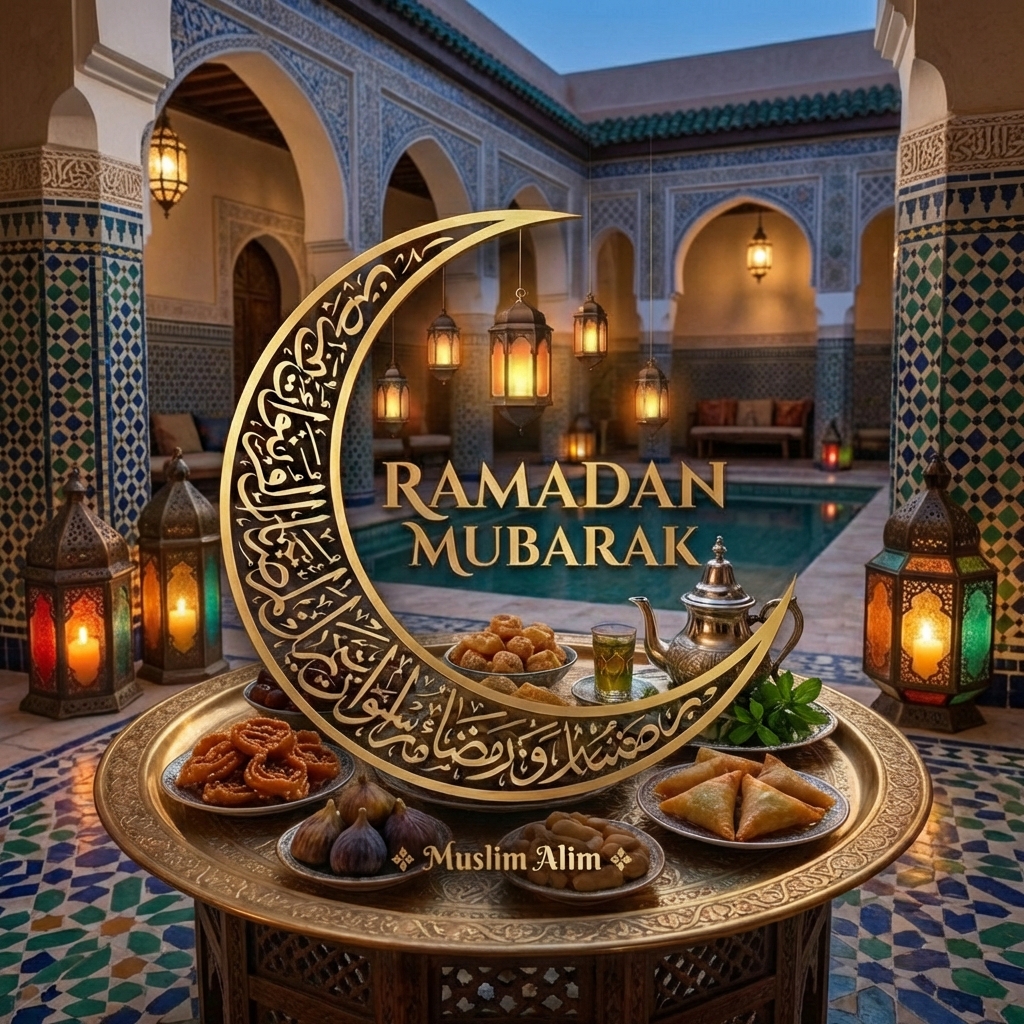
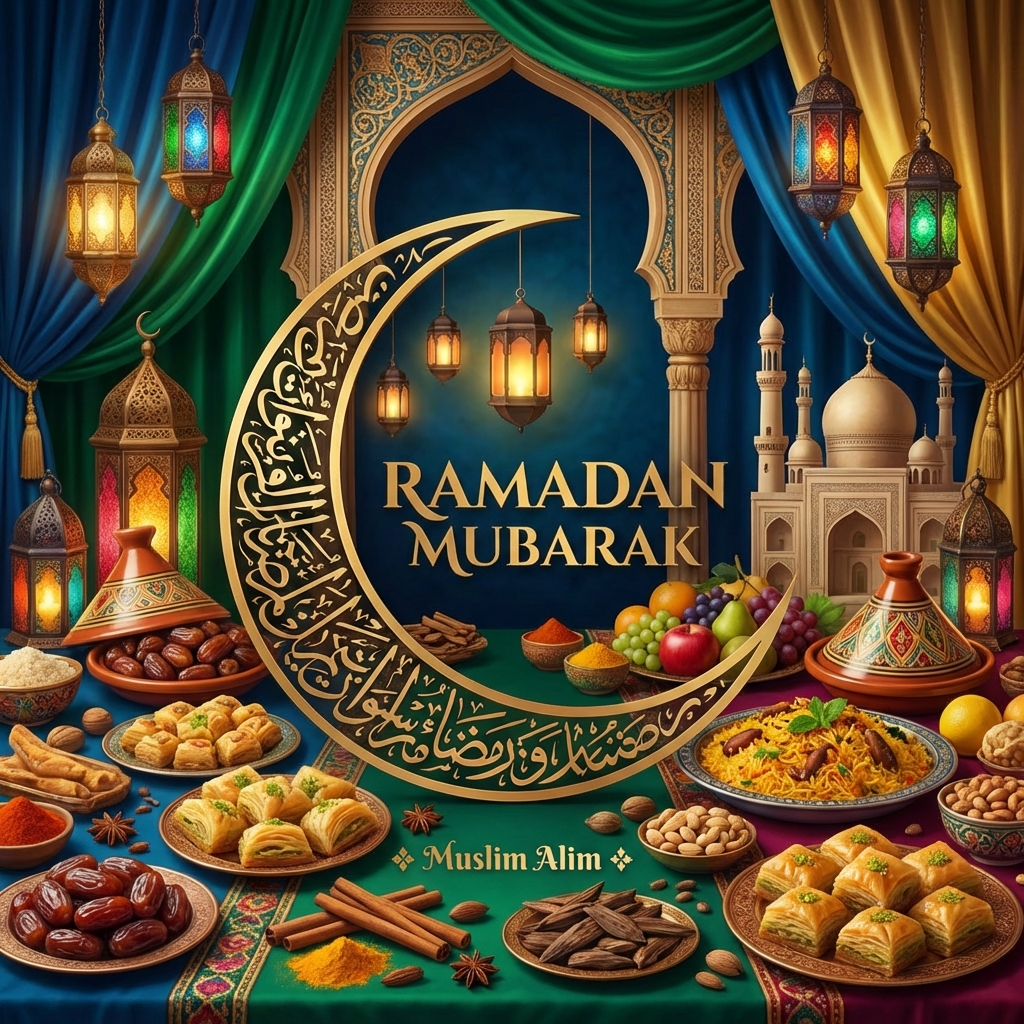
Ramadan Mubarak — the blessed month of fasting and of the Quran
Ramadan is the 9th month of the Islamic lunar calendar, the month of obligatory fasting (sawm) for all Muslims in good health. It marks the first revelation of the Quran to the Prophet Muhammad ﷺ on the Night of Decree (Laylat al-Qadr), one of the odd nights of the last ten of the month. That night is better than a thousand months, according to the Quran.
During Ramadan, Muslims fast from dawn (Fajr) to sunset (Maghrib), abstaining from food, drink and intimacy. The month is also a time to increase the night prayers (tarawih), to read the Quran in full (a juz a day), to give Zakat al-Fitr, and to seek Laylat al-Qadr on the odd nights of the last ten (21, 23, 25, 27, 29 Ramadan).
The Muslim Alim app offers a Quran reading plan for Ramadan, precise suhoor and iftar times for where you are, and these 20 images, easy to share. See also our Jumaa Mubarak images, the 114 surahs of the Quran and the digital dhikr counter.
Also worth reading
All of Prayer & worship
Jumaa Mubarak images
20 beautiful Jumaa Mubarak images to share on WhatsApp and Instagram, with the merits of Friday in Islam, Surah Al-Kahf and the hour when duas are answered.
Read
The Adhan and the Iqamah
Learn the Adhan and the Iqamah phrase by phrase: Arabic text, transliteration, English translation and audio, including the extra line of the Fajr call.
Read
Tawaf and Sa'i counter
Count your 7 circuits around the Kaaba and your 7 trips between Safa and Marwah without losing track. A free counter for Hajj and Umrah, with rite reminders.
Read
Digital dhikr counter
A free dhikr counter for reciting SubhanAllah, Alhamdulillah, Allahu Akbar, La ilaha illa Allah and Astaghfirullah, with a running total of your dhikr.
Read
Dua of the last 10 nights
The dua to recite during the last 10 nights of Ramadan and Laylat al-Qadr: Allahumma innaka Afuwwun, in Arabic, transliteration and English, with its source.
ReadDua for breaking the fast
The dua to recite at iftar: Dhahaba adh-dhama'u in Arabic, transliteration and English, its source in Abu Dawud, and the right moment to say it.
ReadYou may be wondering…
What does Ramadan Mubarak mean?
Ramadan Mubarak (رمضان مبارك) means "blessed Ramadan": it wishes those close to you a month full of blessings. You will also hear Ramadan Kareem, "generous Ramadan", which speaks of Allah's generosity during this month. Both are customary greetings. This page offers 20 images with those wishes, to share on WhatsApp, Telegram, Facebook or Instagram.
When does Ramadan begin?
Ramadan is the 9th month of the Islamic calendar, a lunar calendar. Its beginning is set by the sighting of the crescent moon, which is why the date is announced the evening before and may differ from one country to another. Since the lunar year is shorter than the solar year, Ramadan moves about ten days earlier each year in the Gregorian calendar.
What are the practices of Ramadan?
Muslims fast from dawn (Fajr) to sunset (Maghrib), take suhoor before dawn and break the fast at iftar with the dua for breaking the fast. They read the Quran more, pray the tarawih at night, pay Zakat al-Fitr before Eid and seek Laylat al-Qadr in the last ten nights.
How many rakahs is the Tarawih prayer?
The tarawih are voluntary night prayers particular to Ramadan, prayed in pairs of rakahs after Isha. The number is not fixed as an obligation: many scholars hold to 8 rakahs followed by Witr, on the basis of the Prophet's ﷺ practice, while the common practice in many mosques is 20 rakahs. Both are accepted by the schools.
Who is exempt from fasting in Ramadan?
The Quran (surah 2, verses 184-185) exempts the sick and the traveller, who make up the missed days later. Women who are menstruating or in post-natal bleeding do not fast and make up the days afterwards. Older people and those with a lasting illness who cannot fast feed a poor person for each day (fidya). For a pregnant or nursing woman, the schools differ between making up the days and giving compensation.