Get the Muslim Alim app
Women in Islam: their status, rights and duties
Islam gave women precise rights fourteen centuries ago: knowledge, property, inheritance and consent to marriage. Here is what the Quran and the Sunnah say.

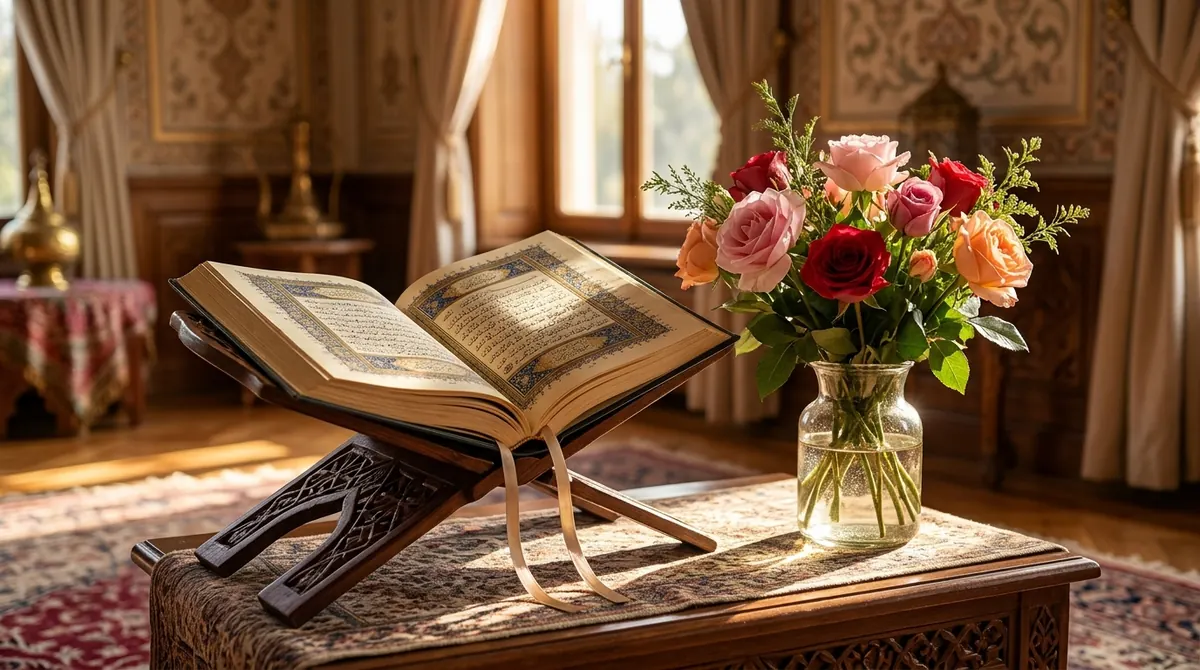
Equality before Allah
“Whoever does righteousness, whether male or female, while being a believer, We will surely cause them to live a good life.”
Surah An-Nahl, 16:97Women’s rights in Islam
| Right | Source |
|---|---|
| To learn and to teach | “Seeking knowledge is an obligation upon every Muslim” (Ibn Majah, 224) |
| To receive a dowry that belongs to her | Surah An-Nisa, 4:4 |
| To inherit from parents and relatives | Surah An-Nisa, 4:7 and 4:11 |
| To consent to her marriage | Sahih al-Bukhari, 5136 |
| To be maintained and treated well | Surah An-Nisa, 4:19 |
| To ask for separation (khul‘) | Sahih al-Bukhari, 5273 |
| To own property, trade and work | Example of Khadijah |
Woman as mother, daughter and wife
The mother: a man asked the Prophet ﷺ who most deserved his good company. He answered three times “your mother”, then “your father” (Sahih al-Bukhari, 5971). The daughter: “Whoever raises two girls until they reach maturity will be with me on the Day of Resurrection like these two fingers” (Sahih Muslim, 2631). The wife: “The best of you is the best to his family” (At-Tirmidhi, 3895).
The duties of the Muslim woman
- The same religious obligations as men: faith, prayer, fasting, zakat, and pilgrimage if she is able.
- Modesty in dress and behaviour, see the hijab in Islam.
- Caring for the home and kind treatment of her husband.
- Raising the children, a responsibility shared with the father.
During menstruation and postnatal bleeding, a woman is exempt from prayer (not made up) and from fasting (to be made up). See also ghusl.
Discover the qualities of the pious woman in Islam and marriage in Islam.
Continue reading
All of Islamic knowledge



You may be wondering…
Are women equal to men in Islam?
Before Allah, yes: “I do not let the deed of any of you be lost, whether male or female” (Surah Al ‘Imran, 3:195). Men and women have the same worth, the same faith and the same reward. Some roles and rules differ according to each one’s responsibilities in the family.
What are women’s rights in Islam?
The right to learn, to own and manage property, to receive a dowry, to inherit (Surah An-Nisa, 4:7), to consent to marriage (Sahih al-Bukhari, 5136), to be maintained by her husband, to work, and to ask for separation (khul‘).
Why is Surah An-Nisa called “The Women”?
Surah 4, An-Nisa, deals at length with women’s rights: dowry, inheritance, protection of orphan girls, marriage and married life.
Can a woman work in Islam?
Yes, while respecting her religion. Khadijah, the wife of the Prophet ﷺ, was a merchant. The money she earns belongs to her; she is not obliged to support the household, a responsibility that falls on the husband.
Test your knowledge of Islam
3 questions, then as many rounds as you like.
Loading questions…