Get the Muslim Alim app
Ayatul Kursi: the Throne Verse in Arabic, transliteration and English
Surah Al-Baqarah, verse 255: the greatest verse of the Quran.
The text of Ayatul Kursi
“Allah! There is no deity except Him, the Ever-Living, the Self-Sustaining (Al-Qayyum). Neither drowsiness nor sleep overtakes Him. To Him belongs whatever is in the heavens and on the earth. Who can intercede with Him without His permission? He knows what is before them and what is behind them, and they encompass nothing of His knowledge except what He wills. His Throne (Kursi) extends over the heavens and the earth, and guarding them does not weary Him. And He is the Most High, the Most Great.”
Surah Al-Baqarah, 2:255To listen to its recitation, open Surah Al-Baqarah on our Quran audio page or read it verse by verse in the online Quran reader.
Explanation of Ayatul Kursi, phrase by phrase
“Allah! There is no deity except Him”
The verse opens with the declaration of faith: no one deserves to be worshipped besides Allah. This is the heart of tawhid, the oneness of Allah, which is also found in Surah Al-Ikhlas.
“The Ever-Living, the Self-Sustaining”
Al-Hayy (the Ever-Living) and Al-Qayyum (the Self-Sustaining, who sustains all things) are among the 99 names of Allah. His life has no beginning and no end, and every creature depends on Him.
“Neither drowsiness nor sleep overtakes Him”
Allah has no weakness: He watches over the universe without interruption. The verse rules out any likeness between the Creator and creatures, who need rest.
“Who can intercede with Him without His permission?”
No one intercedes with Allah without His authorization. Intercession exists, but it remains entirely subject to His will.
“He knows what is before them and what is behind them”
The knowledge of Allah encompasses everything, while creatures grasp only the portion He chooses to grant them.
“His Throne extends over the heavens and the earth”
The Kursi gives the verse its name. Its immensity exceeds the heavens and the earth, and guarding them does not tire Allah. The verse ends with two names: Al-‘Aliyy (the Most High) and Al-‘Azhim (the Most Great).
The virtues of Ayatul Kursi in the hadiths
- The greatest verse of the Quran. The Prophet ﷺ asked Ubayy ibn Ka‘b which was the greatest verse in the Book of Allah; Ubayy answered: Ayatul Kursi, and the Prophet ﷺ praised him for his knowledge (Sahih Muslim, 810).
- Protection for the night. In the account of Abu Hurayra guarding the Ramadan charity, it is taught that whoever recites Ayatul Kursi when going to bed has a protector from Allah over him, and no devil comes near him until morning; the Prophet ﷺ confirmed that this was true (Sahih al-Bukhari, 2311).
- After every obligatory prayer. According to a hadith reported by An-Nasa’i (As-Sunan al-Kubra), whoever recites it after every prescribed prayer has nothing between him and entering Paradise except death.
How to learn it easily
- Listen to the verse several times, recited slowly by a reciter such as Al-Husary.
- Divide it into short phrases (the signs ۚ and ۖ in the Arabic text mark pauses) and learn one phrase a day.
- Rely on the transliteration at first, then read the Arabic directly.
- Recite it after every prayer: five repetitions a day are enough to fix it in a few weeks.
- Track your progress with our Quran memorization tool.
Also worth reading
All of The Quran
Chronology of the surahs
The 114 surahs of the Quran in Mushaf order or in chronological order of revelation, with their Meccan or Medinan origin and their verse counts.
All 114 surahs in detail
A complete guide to the 114 surahs of the Quran: Arabic and English name, place of revelation, number of verses, summary, main themes and key verses.

Listen to the Quran
Listen to the complete Quran online: 114 surahs recited by Al-Afasy, Abdul Basit, Al-Husary, Ash-Shatri and Ad-Dussary. Pick your reciter.

Read the Quran online
Read the complete Quran online: Arabic text, English translation and transliteration for every verse, with verse-by-verse audio and reading progress.
The Adhan and the Iqamah
Learn the Adhan and the Iqamah phrase by phrase: Arabic text, transliteration, English translation and audio, including the extra line of the Fajr call.
Tawaf and Sa'i counter
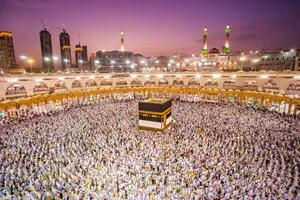
Count your 7 circuits around the Kaaba and your 7 trips between Safa and Marwah without losing track. A free counter for Hajj and Umrah, with rite reminders.
You may be wondering…
What is Ayatul Kursi?
Ayatul Kursi, “the Throne Verse”, is verse 255 of Surah Al-Baqarah. It describes the oneness of Allah, His eternal life, His knowledge and His sovereignty over the heavens and the earth. The Prophet ﷺ described it as the greatest verse of the Quran (Sahih Muslim, 810).
When should Ayatul Kursi be recited?
The hadiths establish two times: after every obligatory prayer (reported by An-Nasa’i in As-Sunan al-Kubra and graded authentic by several scholars) and before sleeping (Sahih al-Bukhari, 2311). Many people also recite it in the morning and evening supplications.
What are the virtues of Ayatul Kursi?
It is the greatest verse of the Quran (Muslim, 810). Whoever recites it at bedtime remains under Allah’s protection, and no devil comes near him until morning (Bukhari, 2311). According to the hadith of An-Nasa’i, whoever recites it after every obligatory prayer has nothing between him and Paradise except death.
Can Ayatul Kursi be learned from transliteration?
Transliteration helps with learning the pronunciation, but it cannot render every Arabic letter. It is best used as a support while listening to a reciter, before moving on to the Arabic text. The rules of recitation are explained on our tajweed page.
What does “Kursi” mean?
The word kursî refers to the Throne, or the Footstool, of Allah. The verse says that His Kursi “extends over the heavens and the earth”: it is an image of the immensity of His dominion and His knowledge. Scholars recommend affirming it as Allah described it, without comparing it to anything.
Test your knowledge of Islam
3 questions, then as many rounds as you like.
Loading questions…